

Many fascinating discoveries and new insights into the curiosities of the ancient world have been unearthed throughout 2025.
Archaeological findings over the last 12 months have helped push back the timescales for ancient construction in Europe and elsewhere, while the unearthing of unique artifacts has added new clues to our understanding of ancient life. Additionally, several discoveries in 2025 have even helped bridge the gap between ancient history and mythology.
With such discoveries in mind, here’s a look at some of our favorite archaeological discoveries from 2025, and some of the greatest new insights we’ve obtained about the ancient world throughout the year.
A 4,000-Year-Old Labyrinth Rewrites an Ancient Myth
The unearthing of a massive, 4,000-year-old labyrinthine structure in Crete, hailed by researchers as among the most important finds of the century, captured headlines in 2025 as new details about the curious site, initially discovered in 2024, continue to emerge.

The accidental discovery, uncovered during excavations in advance of the construction of a new airport on the island, suggests that complex designs existed in the ancient world long before classical Greek accounts popularized the legend of the Minotaur and its famous labyrinth, potentially even offering support for there being at least some factual basis for the legendary structure’s existence.
A 5,000-Year-Old Spanish Tomb Reveals a Connected Ancient World
This year, the discovery of a 5,000-year-old tomb in Spain revealed unexpected evidence of long-distance cultural and material exchange in ancient Europe. Artifacts found at the site suggest that ancient communities were far more interconnected than previously assumed, sharing ideas, technologies, and symbolic practices across vast regions.
“The presence of seashells in an inland territory reflects the importance of the sea as an element of prestige and the existence of long-distance exchange networks,” explained Professor Juan Jesús Cantillo of the University of Cadiz, who was involved with the research.

Rather than isolated settlements, the tomb supports a growing view of prehistoric Europe as part of a dynamic, networked world—one in which trade routes and shared traditions linked distant populations centuries before written history.
Pompeii Continues to Yield Surprises
Excavations at Pompeii once again reshaped historians’ understanding of Roman life. This year, the intriguing placement stairway led archaeologists to evidence of a “lost” portion of the ancient city, thanks to modern 3D digital reconstructions that reveal how much of the ancient settlement was lost during the cataclysmic eruption of Mount Vesuvius and how it might have looked nearly 2000 years ago.

At the same time, new research into Roman concrete is helping to uncover how the material can seemingly self-heal over thousands of years. By decoding the chemical processes that underpin its durability, MIT scientists have gained insights not only into Roman engineering mastery but also into how ancient knowledge might inform modern sustainable construction.
Sunken Megaliths Off France Push Back Europe’s Timeline
Off the coast of France, archaeologists recently discovered a series of 7,000-year-old submerged megaliths, dramatically extending the known timeline of monumental stone construction in Europe. The finds suggest that large-scale architectural projects were underway centuries earlier than previously believed—and that rising sea levels may have hidden entire chapters of human history.


“Also of intrigue is the fact that local legends bear some similarities to the recent discovery,” Ryan Whalen reported for The Debrief on December 14. “Specifically, a legend from around Brittany holds that, west of the Bay of Douarnenez, a drowned city known as Ys is believed to lie at the bottom of the ocean.”
Based on recent discoveries, archaeologists who published their work in the International Journal of Nautical Archaeology on December 9, 2025, believe the sunken structure could be related to traditional beliefs long associated with the region.
New Clues Near Stonehenge Challenge Old Assumptions
And finally, ongoing discoveries near the famous Stonehenge monument continue to offer new insights into Neolithic life in Britain. Among 2025’s major discoveries were a massive ring of ancient pits suggesting the presence of an ancient henge, and, more broadly, coordinated construction efforts on a scale not previously recognized, pointing to sophisticated social organization and long-term planning at the famous site.
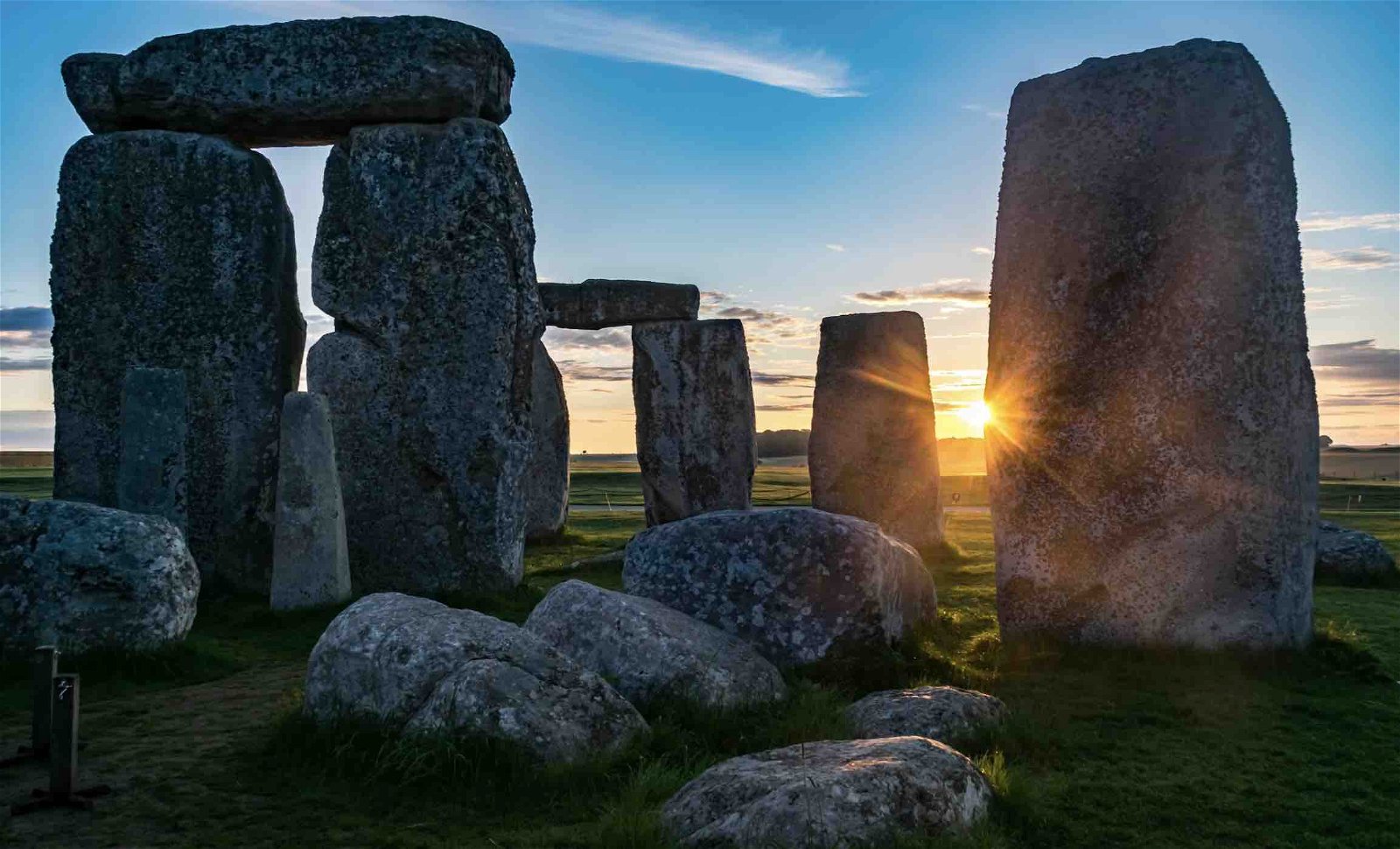
Meanwhile, research into the enigmatic Newall boulder overturned the idea that glaciers transported the stone to the site, instead revealing a far more deliberate human role in its placement. Together, the findings reinforce the view that Stonehenge was part of a much larger, carefully designed ceremonial landscape.
Micah Hanks is the Editor-in-Chief and Co-Founder of The Debrief. A longtime reporter on science, defense, and technology with a focus on space and astronomy, he can be reached at micah@thedebrief.org. Follow him on X @MicahHanks, and at micahhanks.com.