

Tyrannosaurus rex was an energetic, warm-blooded predator with a body temperature comparable to that of modern humans, UCLA scientists have found using a new technique that can estimate the body temperatures of extinct species.
In a recent study published in Science Advances, the UCLA team applied its method for estimating the body temperatures of extinct animals from fossilized remains to T. rex teeth held at the Natural History Museum of Los Angeles County.
The researchers’ data suggest T. rex maintained a body temperature of around 97°F, remarkably close to the average human body temperature of 98.6°F. While fossils of the dinosaur have been found as far north as Alaska, the new findings offer direct evidence that T. rex could maintain an elevated body temperature even while inhabiting environments that would have been challenging for many cold-blooded reptiles.
Sourcing a T. Rex
UCLA researchers first devised the technique used to estimate T. rex’s body temperature about a decade ago, but at the time, it was too destructive, requiring a significant amount of fossil material. In the intervening years, researchers continued to refine the process, eventually reducing the amount of material required to just 10% of what was originally needed. With the technique requiring a much smaller sample, the Natural History Museum of Los Angeles County agreed to provide material from two teeth belonging to a tyrannosaur skeleton on display at the institution, now known as Thomas the T. rex.
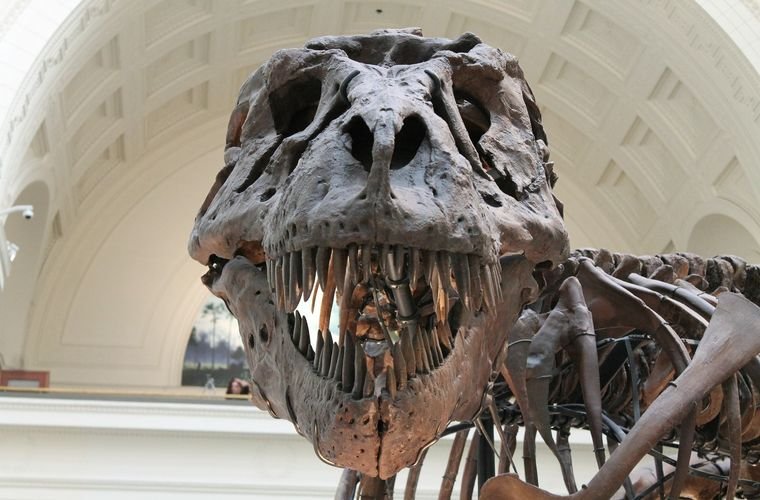
“We’re asked for fossils for use in destructive analysis all the time,” said Luis Chiappe, a curator at the LA Natural History Museum. “The museum contains tens of millions of specimens of minerals, animals and fossils that are irreplaceable. We have to make decisions that balance the damage to the specimen against gaining knowledge about the natural world. Sacrificing small portions of two teeth to learn about T. rex’s body temperature is definitely worth the trade-off.”
This particular sample did not come from the frigid extremes of the species’ roaming range, but from Montana’s Hell Creek site, a major source of preserved dinosaur material. To check their work, the team compared their findings with the teeth of a crocodilian sample retrieved from the same site to ensure a quirk of local geology was not skewing the results.
Taking a Dinosaur’s Temperature
The teeth are key to the technique because rare carbon and oxygen isotopes bond differently within them depending on temperature. At higher temperatures, these isotopes are less likely to bond together, leaving a chemical signature that researchers can use to estimate the animal’s body temperature.
“That’s the basis of using the isotopes as a thermometer,” said study co-author Robert Eagle, a UCLA geobiologist. “In theory, we can make measurements using any part of the skeleton, but the bones in our body are constantly being remodeled and dissolved and replaced. Tooth enamel has large crystalline structures that are extremely durable, making it the part of the skeleton that most resists chemical alteration by the environment over the eons.”
The team used a modern dental drill to extract powdered enamel from the teeth, which was then dissolved in phosphoric acid. As carbon dioxide gas was released during the acidic breakdown, they pressurized it to form a denser jet. The team then used a mass spectrometer to look for isotope ratios in the emerging CO2.
Despite growing evidence from tyrannosaur remains found in colder regions, this is the first direct confirmation that T. rex was warm-blooded.
Where T. Rex Roamed
While T. rex’s body temperature is closer to that of a furry mammal than a typical reptile, the story doesn’t end there. The dinosaur’s descendants, modern birds, continued the warming trend and today have typical body temperatures of between 104°F and 109°F.

Beyond determining which climates would be suitable habitats for the dinosaur, the work also helps paleontologists reconstruct T. rex’s lifestyle. A warm body requires a fast metabolism, increasing the species’ required food intake.
Although the Late Cretaceous world inhabited by T. rex was considerably warmer than Earth today, Alaska would still have presented challenging conditions for many reptiles. Researchers have recovered few fossils belonging to turtles, lizards, crocodilians, or other reptiles from some of the northern environments where tyrannosaurs lived, underscoring their apparent ability to tolerate colder climates.
“Now we have empirical evidence using this geologic thermometer,” said co-author Alessandro Chiarenza, a paleontologist at University College London. “Using paleoclimate models of the past, we were able to reconstruct a range in North America 66 million years ago that stretched from Mexico to Alaska, based on where T. rex could have survived with a 97 F body temperature.”
The paper, “The Body Temperature of Tyrannosaurus Rex,” appeared in Science Advances on September 16, 2026.
Ryan Whalen covers science and technology for The Debrief. He holds an MA in History and a Master of Library and Information Science with a certificate in Data Science. He can be contacted at ryan@thedebrief.org, and follow him on Twitter @mdntwvlf.