New imagery obtained by the Event Horizon Telescope (EHT) collaboration is offering an unprecedented look at the dynamics of the supermassive black hole Sagittarius A*, revealing its strong and organized magnetic fields.
NASA officials said on Tuesday that the space agency is planning to conduct a wide array of science experiments during the full solar eclipse on April 8, 2024, that will focus on gaining insights into a mysterious region of the Sun and how it affects the Earth.
Engineers create an "ultrablack" coating for space applications that absorbs 99.3% of the light it encounters across a wide range of light wavelengths.
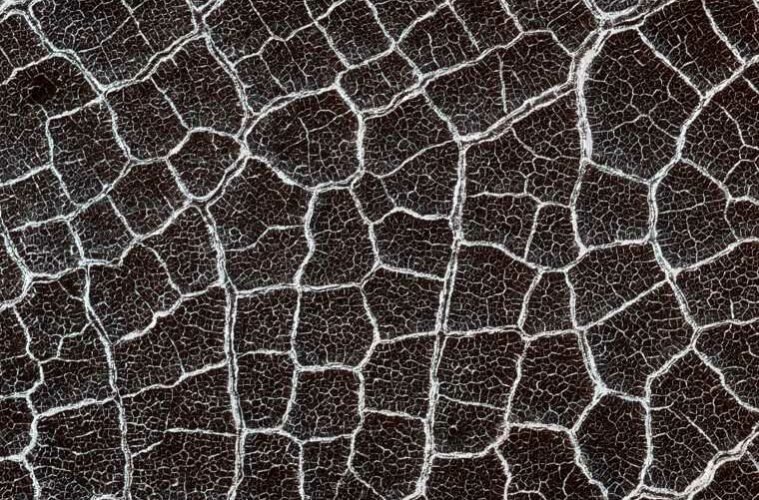
Ground penetrating radar data captured by China's Zhurong Mars rover has revealed the presence of a series of 16 mysterious polygons hidden beneath the planet's surface.
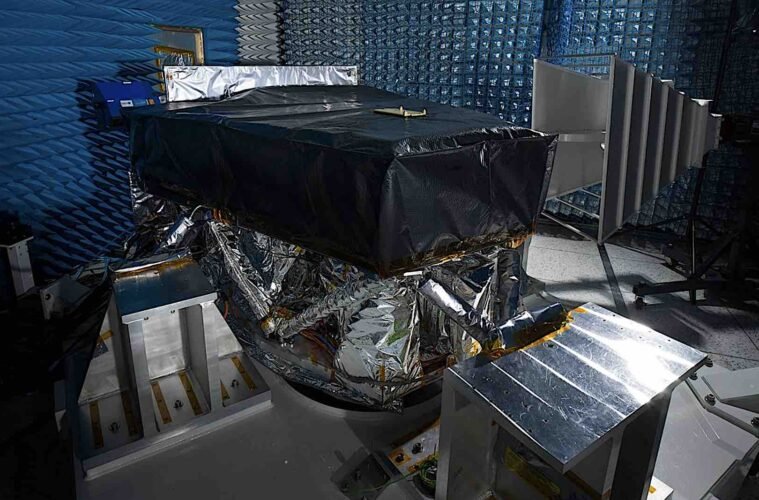
NASA says it has successfully administered multiple tests to a new instrument on the Nancy Grace Roman Space Telescope, which will allow unprecedented views of planets beyond our solar system.
Researchers using a high-resolution electron microscope have confirmed the presence of organic compounds within the Winchcombe meteorite without the use of any chemicals.
A new study by researchers from the University of Washington is lending fresh support to Charles Darwin's idea that the origin of life on Earth began in phosphate-rich bodies of water.
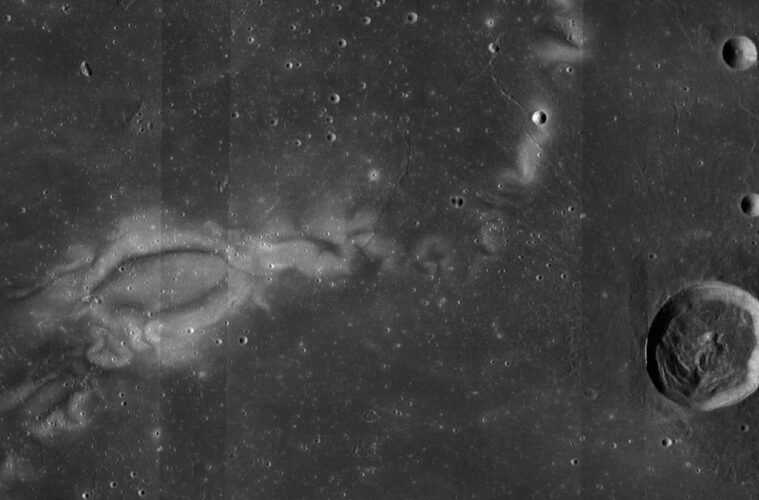
Researchers studying over one million digital photos have found something anomalous on the Moon's surface that exhibits unique magnetic and reflective properties.
One of astronomy’s most perplexing mysteries has been resolved, according to scientists involved with new findings made possible by NASA’s James Webb Space Telescope.
A landmark new study based on the results of the Dark Energy Survey (DES) is complicating our understanding of the cosmos, but offers promising new insights into the accelerating expansion of the universe.
A team of astronomers says they have found the unusual location of a rare cosmic event, which appears to be the farthest of its kind yet detected, with help from NASA’s Hubble Space Telescope.
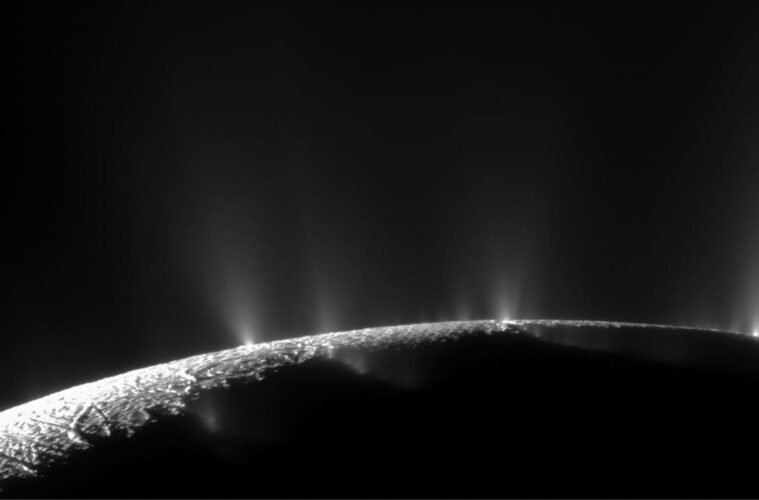
A team of NASA researchers says they have identified 17 potentially habitable icy worlds including two that are cosmically nearby, which may have subsurface oceans teeming with extraterrestrial life.
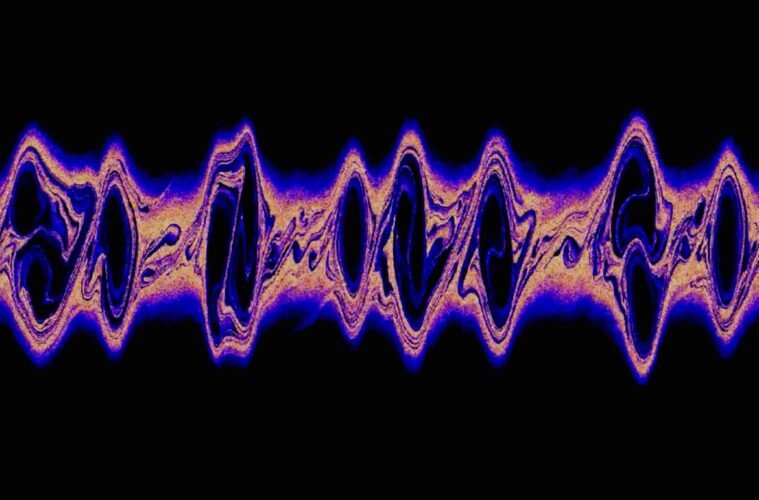
Scientists in Germany report the discovery of a new plasma instability could potentially upend our current understanding of cosmic rays and their origins.