Whether Unidentified Anomalous Phenomena (UAP) originate from an adversary or something else entirely, democratic nations cannot afford to be complacent.
American lawyer Irina Tsukerman examines Britain’s WWII-era British Security Coordination campaign, and a potential lesson NATO must learn to adapt to today’s political environment.
Deep in the world’s remaining equatorial forests, the last uncontacted Indigenous peoples continue to live in near-total isolation, writes University of Toronto professor KW Bowman.
For the first time in more than half a century, NASA will soon be sending an intrepid crew of astronauts toward the Moon with the launch of the Artemis II mission.
Leslie Kean and Ralph Blumenthal report on discussions between U.S. lawmakers and Brazilian witnesses marking the thirtieth anniversary of the "Varginha UFO Incident."
Tales of sea serpents have haunted seafarers for centuries, and Scottish researcher Adrian Shine offers a naturalist's view on some of history's most famous cases.
Michael Glawson, Ph.D., argues that now is the time to eliminate the "blind spots" in the quickening development of artificial intelligence, before it's too late.
The rapidly expanding brain-computer interface (BCI) field is not only driving cutting-edge neuroscience but also fueling a competitive race for market dominance.
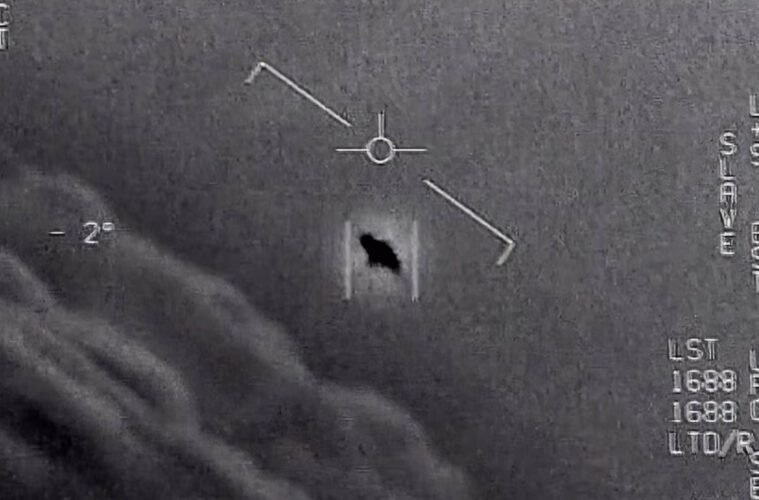
Christopher Mellon offers perspectives on the need for reducing unnecessary secrecy regarding the management of unclassified U.S. government videos of unidentifed aerial phenomena (UAP).
Experts are calling for the implementation of a framework for AI equality to help elevate the voices of communities that could become lost amid a shifting digital landscape.
Are there particles that can move faster than light? Harvard astronomer Avi Loeb explores this question and the mysterious role of hypothetical particles known as tachyons.
Harvard astronomer Avi Loeb explains why it's an understatement to think that humans could have behaved more intelligently throughout our history, and what that means for the future.
The advancement of low Earth orbit technologies and addressing challenges like UAP were among the issues discussed during a recent meeting hosted by the National Science Foundation.
What would happen if the velocities of all particles in the Universe underwent what physicists call 'Big Crunch'? Avi Loeb explores in this Thanksgiving installment of 'Our Cosmic Neighborhood.'
In his new documentary "Dark Alliance," filmmaker Darcy Weir presents a case study in the dangers of manipulation and the spread of misinformation in the UFO community.