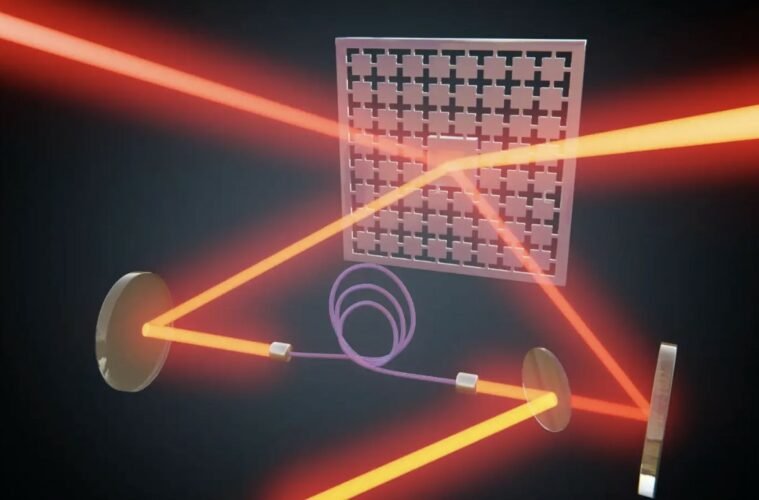
Researchers have used a half century of lunar ranging data to test the equivalence principle, one of the core principles of modern physics. Here's what they found.
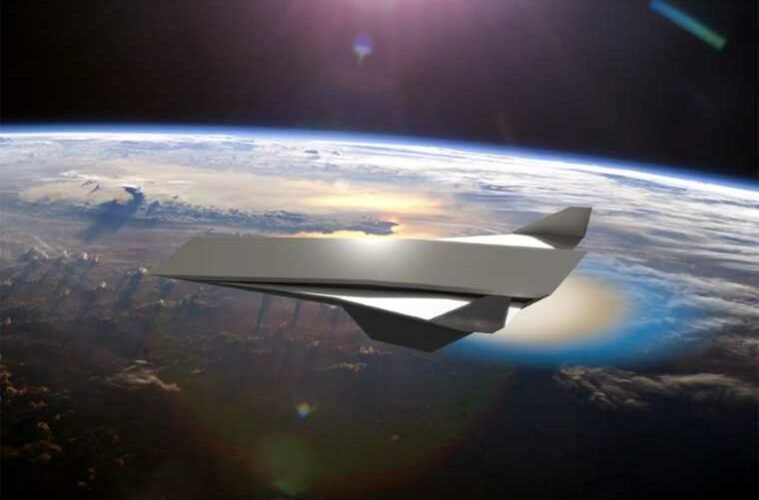
In October of this year, IVO LTD.'s physics-defying Quantum Drive will launch into low earth orbit, where it will get it first test in the vacuum of space.
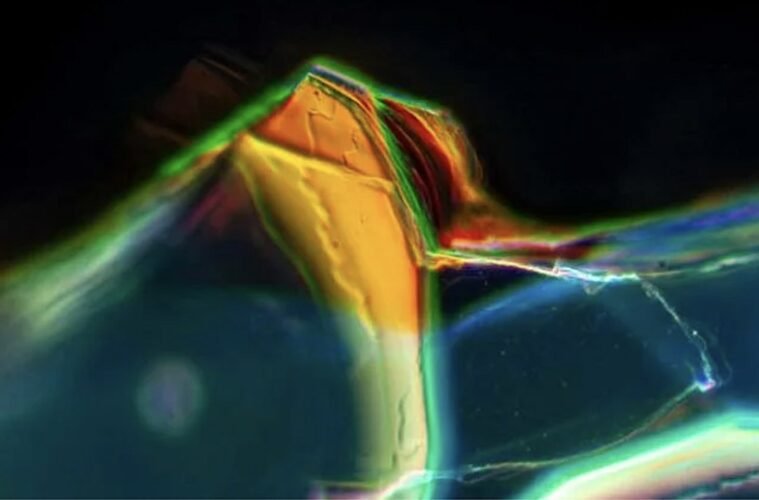
“We don’t yet understand exactly how it happens.” A breakthrough with photonic time crystals in the near-visible spectrum could lead to new approaches in optics and the creation of novel disruptive technologies.
The detection of a large, heat-emitting mass buried beneath the far side of the Moon suggests it may have a history more like our planet than scientists once realized.
Harvard researchers say they have succeeded in developing a method of controlling points of darkness known as optical singularities with the help of metasurfaces.
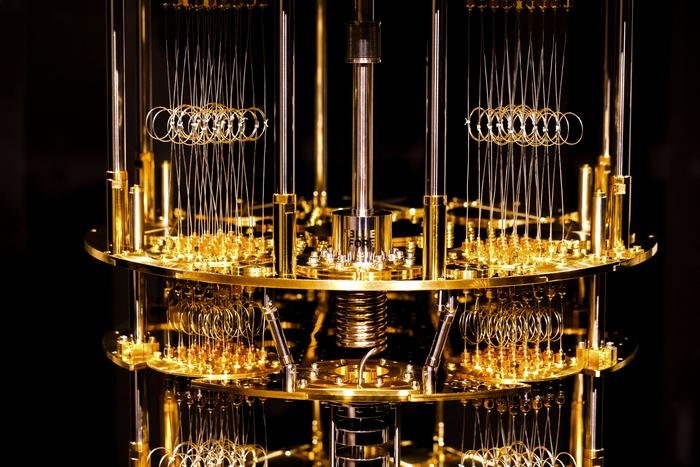
Google says its Sycamore quantum processor can now make instant calculations that would require the fastest conventional computers currently in existence almost half a century to complete.
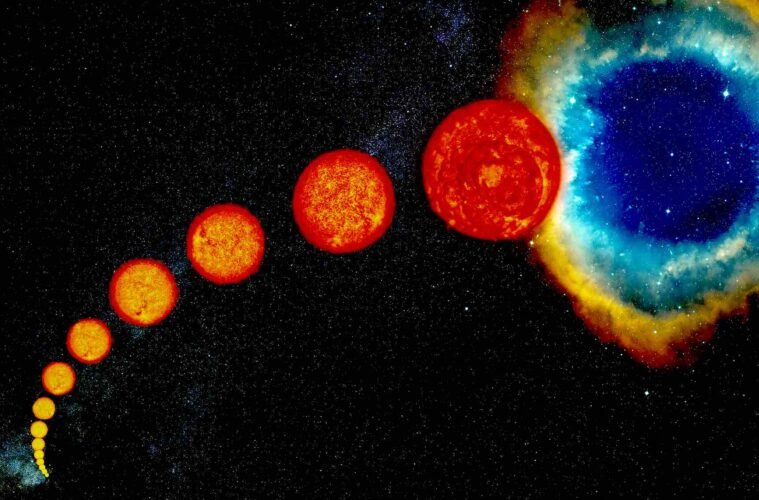
New research using the most advanced tools available to astronomers has proven that time moved five times slower a billion years after the Big Bang than it does in the present, proving Albert Einstein was right again.
An international team of researchers says they have discovered a new variety of quantum vortexes within superconductors, pointing to a previously unknown circulatory phenomenon.
Here are five ways detection of the gravitational wave background (GWB) by the North American Nanohertz Observatory for Gravitational Waves (NANOGrav) revolutionizes our understanding of the universe.
Researchers have developed a seemingly magical material inspired by the skin of squids that can block EM emissions, microwaves and IR heat, and also switch between transparent and opaque states simply by being stretched or contracted.
New research looking into the effects of time dilation may help researchers unlock the mysterious nature of Dark Matter and the accelerated expansion of the universe by supporting or disproving the theories of Albert Einstein
A team of Canadian researchers says that the lack of clumpiness in the structure of the universe could help to shed new light on the composition of dark matter.
The Alternative Propulsion and Engineering Conference returns this Saturday, June 10th, including discussions of Warp drive, anti-gravity and even UAPs.
DARPA has announced a new program aimed at developing unique electrode materials that can be used to produce a magnetohydrodynamic (MHD) drive for the U.S. military.
Scientists with the Department of Energy’s Los Alamos National Laboratory say they have produced a new method that allows them to introduce hard physics constraints to the structure of neural networks.
An algorithm that allows more precise forecasts of the positions and velocities of a beam’s distribution of particles as it passes through an accelerator has been developed by researchers with the Department of Energy (DOE) and the University of Chicago.
Scientists with the University of Chicago say they have discovered links between photosynthesis and an unusual state that facilitates the flow of energy through materials, according to newly published research.
According to a group of physicists, witness descriptions of the famous 2006 Chicago O’Hare UAP incident are suggestive of a form of advanced propulsion that may one day revolutionize space travel.
Researchers at the University of Toronto say they are closer than ever before to resolving the curious behavior of “strange metals,” a metallic phase of matter that is not described well in current theory.
A potentially "illuminating" new theory says that the universe's first light may have been ripped from the fabric of space/time by the extreme forces of gravity in the form of gravitational waves that existed right after the big bang.
A stunningly detailed cosmological map that covers about of quarter of the entire sky shows the effects of dark matter on the cosmic microwave background radiation, lending strong support for Albert Einstein's theory of gravity.
Physicists say they have reconciled the third law of thermodynamics with quantum physics, in new research that proves absolute zero is theoretically possible.
A new study may have revealed clues to understanding a long held cosmological puzzle, involving a discrepancy in the cosmic expansion rate of the universe.
A breakthrough in the detection of antineutrinos using pure water rather than a liquid scintillator has been made, according to an international team of scientists.
Researchers from the international think tank Applied Physics say they have created an artificial black hole in the lab that will help bring about the development of a working warp drive spaceship.
Scientists in New Mexico say they have mastered ultrafast steering of light pulses from conventional, “incoherent” sources in a major scientific breakthrough.
Funded by the Defense Advanced Research Projects Agency (DARPA), the folks at Electric Sky are moving closer to revolutionizing electric aviation by making its Whisper Beam power-beaming system a reality.
A new study reveals the source of a curious feature of the Sun’s atmosphere that produces a signal pattern that researchers have likened to a human heartbeat.
Australian researchers have measured the effects of massive galactic-scale shockwaves rippling through the cosmic web, a structure that encompasses all of the matter in the known universe.
A naturally-occurring enzyme that helps some forms of bacteria survive in extreme environments has that seemingly magical ability to make electricity out of thin air.
In a breakthrough for photonics previously considered impossible, researchers have shown the ability to manipulate microscopic objects with light at the sub-wavelength scale.
Egyptian Antiquities officials say researchers from the ScanPyramids Project have discovered a previously hidden corridor within the Great Pyramid of Giza
Physicists in West Virginia have announced a potential breakthrough that could help upend a longstanding constraint imposed by the first law of thermodynamics.
The magic angel where bilayer graphene turns into a superconductor may have already been revealed in the famous double-slit experiment that showed electrons can be both particles and waves.
A discovery involving variance in friction at different speeds between two different kinds of surfaces seemingly defies an experimental law of physics, according to newly published research.