Following the announcement that the James Webb Space Telescope has already endured 14 micrometeoroid impacts, NASA says that, barring an unforeseen event, the groundbreaking observatory should still be able to conduct science operations for another 20 years.
The research team behind the first physical warp drive has partnered with an associate dean of physics from Carnegie-Mellon University to detect extraterrestrial spacecraft using gravitational waves.
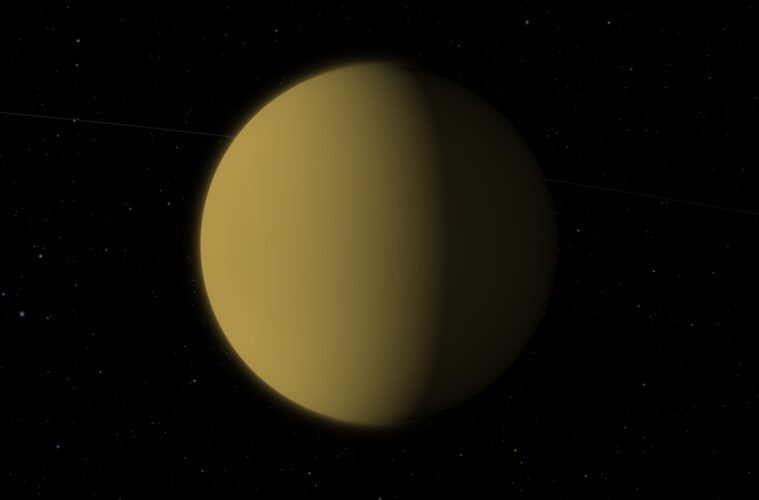
Saturn's moon Titan has an atmosphere rich in organic compounds, which has led to speculations that chemical precursors of life may have been generated there.

Dr. Greg Hodgin, founder of ZC Inc., discusses his love of Star Trek and how he and his company is planning to build the world's first warp drive spacecraft.
If commercial space travel eventually becomes more widely accessible, there will be significant challenges for individuals looking to buy their ticket to the final frontier.
NASA’s Artemis mission saw significant setbacks on Saturday, after engineers were unable to resolve a hydrogen leak in an interface connecting the liquid hydrogen fuel feed line with the Space Launch System (SLS) rocket.
A team of scientists have announced the discovery of a possible alien water world that, in astronomical terms, is relatively close to Earth’s backyard.
The first complete set of images captured by NASA’s James Webb Space Telescope, “the world’s largest and most powerful space telescope,” was just revealed by NASA.