
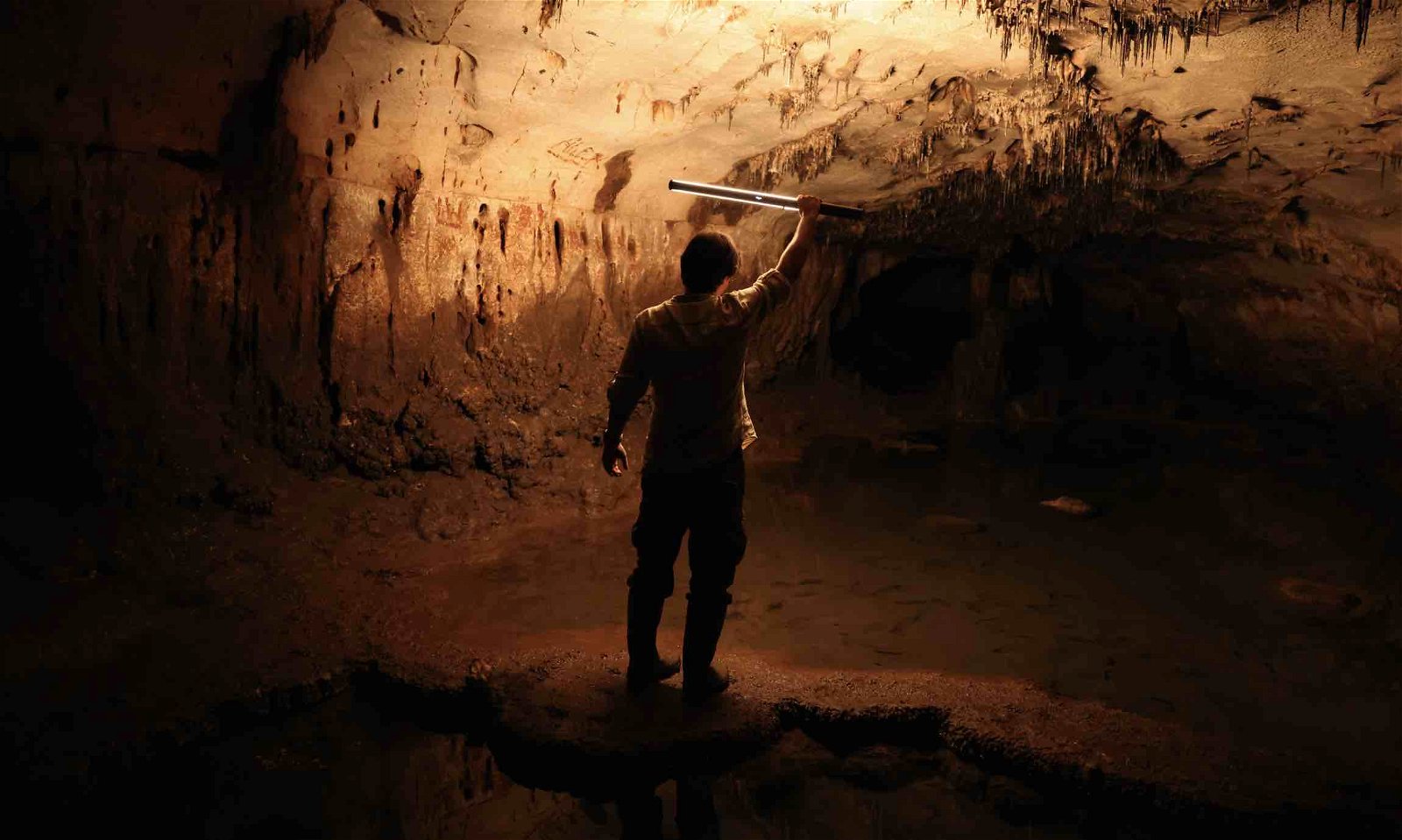
A remarkable collection of ancient inscriptions within a cave in eastern Spain is providing archaeologists with deep new insights into the early religious practices it once housed.
Among the new findings, researchers say the inscriptions are shedding new light on the prominent role women played in a subterranean cult, which centered on a previously unknown ancient goddess.
The discoveries were made at Cova Dones in Millares, Valencia, a cave that presents evidence of human activity going back tens of thousands of years.
There, researchers recently documented at least 120 Latin inscriptions dating to the first and second centuries A.D.—a significant increase in the number of writings from this era known to exist at Cova Dones.
Previously, only around 15 of these inscriptions had been identified. The new findings elevate Cova Dones to what may be the Roman Empire’s largest known cave sanctuary containing Latin inscriptions.

The Ritual Space of an Ancient Goddess is Revealed
Research at the cave was led by researchers from the University of Alicante and the University of Zaragoza, which revealed not only the inscriptions, but also a well-preserved ritual space located at a depth of close to 200 meters within the cave.
Among the discoveries researchers have made are a small collection of votive inscriptions, which are dedicated to what appears to be a goddess referred to simply as “Domina,” which means “The Lady.”
Three of those inscriptions also feature an unrecognized epithet—MALACI—which the researchers believe may describe some aspect of this mysterious goddess, possibly related in some way to the water that flows through the underground ritual space within the cave.
“Thanks to a set of five votive inscriptions, we know for certain that in Roman times a goddess, reverentially called Domina, ‘the Lady,’ was venerated in the cave,” says Silvia Alfayé, a professor of Ancient History at the University of Zaragoza.
Alfayé also says that the inscriptions further indicate the active role women played in the deity’s worship during this period.
Anatomy of an Ancient Roman Subterranean Cult
Within the newly-identified ritual space at Cova Dones, several individual female names were identified among the newly discovered inscriptions. This, according to Alfayé and her colleagues, reinforces the notion that the sanctuary had been a regular destination for women, rather than merely serving as an occasional site of pilgrimage.

Specifically, the presence of the inscriptions all within a single chamber, which the research team has dubbed the “Roman Sanctuary,” places them alongside natural pools fed by underground water, which may have added to the allure of the subterranean ritual landscape the cave offered.
Strengthening that interpretation, the archaeologists also discovered spindle whorls, a variety of small tools used for spinning thread that were closely linked with women’s domestic and symbolic roles in the ancient Roman world, and beyond. Their presence near the inscriptions, the researchers believe, could imply links to ceremonies performed in the cave long ago, which may have incorporated textile-related offerings.
Ongoing Discoveries at Cova Dones
The recent findings at Cova Dones are only the latest offerings from the ancient site, which is already renowned for the ancient human presence it has preserved.

In 2023, The Debrief reported on discoveries within the cave that are now recognized as the largest known collection of surviving Paleolithic cave art in eastern Iberia. Such discoveries include more than 100 paintings and engravings dating back over 24,000 years.
The discovery of the Roman sanctuary occurred the following year, with the detection of Latin inscriptions and a coin featuring the Roman emperor Claudius, which archaeologists believe may have been left as a votive offering.
Then in 2025, archaeologists discovered more than 100 intentionally modified stalagmite formations, a unique category of archaeological evidence known as speleofacts. Altogether, such discoveries have helped cement Cova Dones as one of the most important sites in Europe to preserve evidence of prehistoric human modifications to an underground space.

Unraveling the Mysteries of a Subterranean World
Adding to the recent Roman inscription discoveries, Alfayé and her colleagues have also discovered artifacts that include bronze rings, a bracelet, ceramic vessels, faunal remains, and additional ritual objects—all of which provide additional clues that may help to reconstruct centuries of religious activity that once occurred deep within the cave.
Presently, many of the inscriptions await deciphering, and some large sections of the cave remain that have not yet been explored. With the promise of additional discoveries, archaeologists are confident that Cova Dones has only just begun to reveal its secrets.
In the coming years, new chapters in the story of this ancient subterranean landscape await discovery, exploration, and interpretation.
Micah Hanks is the Editor-in-Chief and Co-Founder of The Debrief. A longtime reporter on science, defense, and technology with a focus on space and astronomy, he can be reached at micah@thedebrief.org. Follow him on X @MicahHanks, and at micahhanks.com.