
Welcome to this edition of The Intelligence Brief… This week, momentum is accelerating around nuclear fusion, as private investment and technological breakthroughs suggest the long-elusive clean energy source may arrive far sooner than expected. In our analysis, we’ll explore 1) how more than $7 billion in funding is driving a new wave of fusion startups, 2) the 2022 milestone fusion reaction that produced net-positive energy and ignited global investor confidence, 3) why companies like Commonwealth Fusion Systems and tech giants like Google and Microsoft are already positioning for the fusion future, and 4) how an accelerated fusion timeline could upend energy markets, global power structures, and long-term infrastructure planning if the world isn’t ready.
Quote of the Week
“Fusion is not something to tiptoe into.”
– Francesco Sciortino, CEO, startup Proxima Fusion
RECENT NEWS from The Debrief
- Scientists link cataclysmic eruptions to mysterious continent-sized ‘BLOBS’ within the Earth.
- Astronomers have detected a giant planet and “hidden substructures” lurking around a young star.
- Forget about bright LEDs. There’s a new kind of ultra-bright QRLEDS in town.
- This popular food trend may be contributing to an increase in overeating.
- Archaeologists keep finding gigantic shoes at this 2000-year-old Roman site
- Get all the latest stories from The Debrief, with more breaking stories at the end of this week’s newsletter.
Is Nuclear Fusion Much Closer Than We Think?
Following decades of setbacks in the scientific pursuit of the nuclear fusion dream, as well as skepticism about its overall feasibility, now a growing number of experts are saying we could be closer to making it a commercial reality than ever.
S&P Global reported this week that a sharp rise in interest has emerged, as evidenced by more than $7 billion that has been generated in fundraising spanning dozens of fusion startups around the world, with many potential investors looking to not only test the waters, but to take a deep dive into nuclear future.
“Fusion is not something to tiptoe into,” Francesco Sciortino, CEO of fusion startup Proxima Fusion, said during an appearance on S&P Global’s Energy Evolution podcast this week.
But what is driving the sudden surge in funding that has some experts predicting a significant fusion breakthrough, instead of being decades away based on current timelines, could be much closer than we think?
A Nuclear Fusion Milestone on the Horizon?
Historically, nuclear fusion has been consistently viewed as being “20 years away,” although such hopeful estimates have repeatedly been met with setbacks.
Then, an actual milestone came three years ago, when researchers at Lawrence Livermore National Laboratory reported the breakthrough achievement of a net-positive energy fusion reaction, which it characterized at the time as “a major scientific breakthrough decades in the making that will pave the way for advancements in national defense and the future of clean power.”
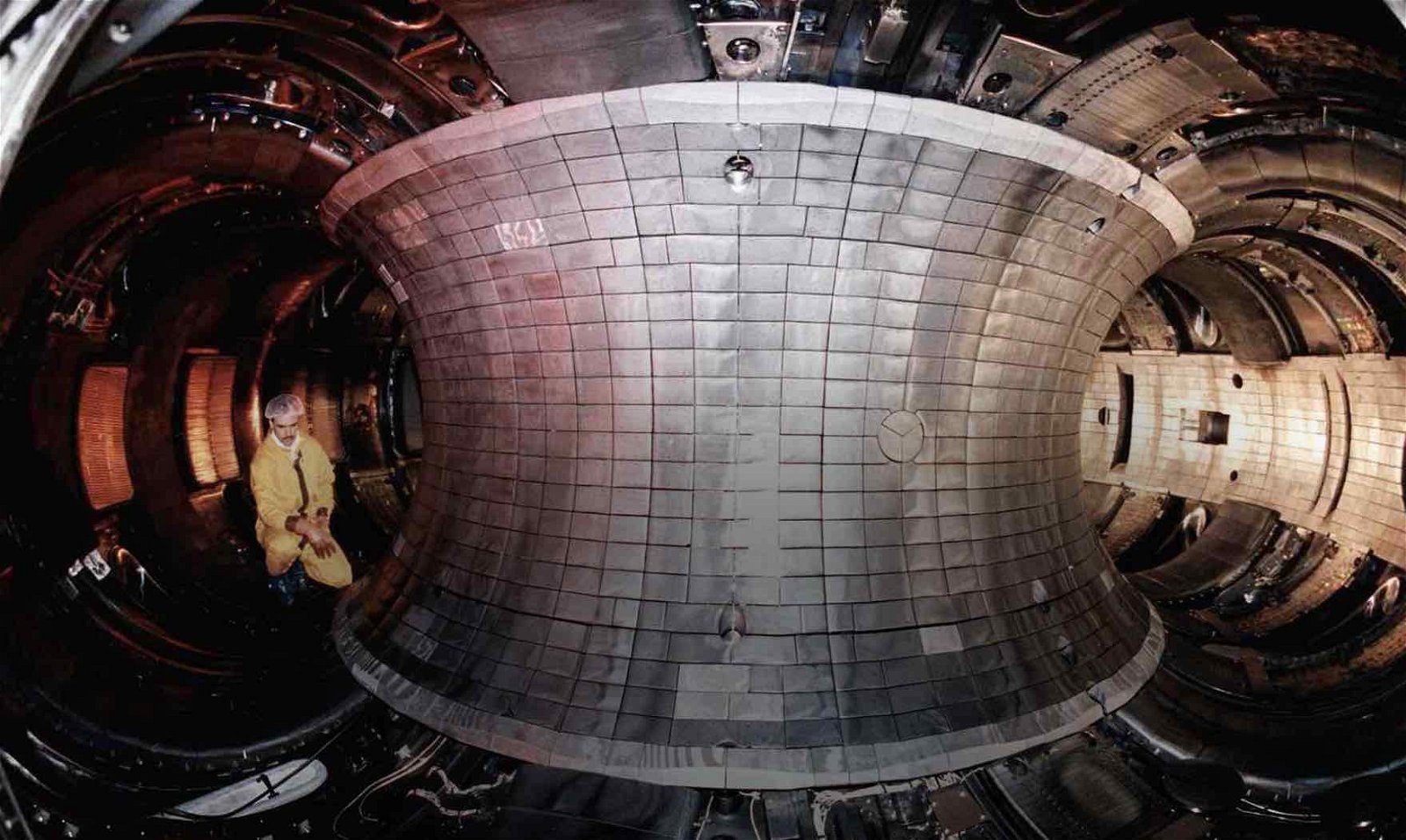
More than just a scientific milestone, it was also an achievement that sparked a wave of private investment. Now, companies like Commonwealth Fusion Systems (CFS), a startup building its SPARC fusion demonstration facility in Massachusetts, have reportedly raised more than $2 billion, a funding surge that is helping budding energy companies like them lead a global push that includes over 45 private fusion companies, with more than $7 billion in combined funding.
Breakthroughs Already Underway
According to a report in Time this week, CFS’s breakthrough lies in its use of high-temperature superconducting tape capable of generating extremely strong magnetic fields that are believed to be able to maintain the extreme conditions needed for fusion. Based on such technologies, the company states that it is currently aiming to deliver net energy from fusion by 2027, with its first commercial fusion power plant scheduled for deployment in the early 2030s in Virginia.
Such developments appear to signal that both technological advancements and the funding needed to propel them could mean that the technological feasibility of nuclear fusion is within reach. Still, there are lingering questions about economic viability—while CFS believes profitable fusion energy will be attainable if they can produce electricity for $100 per megawatt-hour (MWh), significant financing will be required to scale production, and it remains unclear who will shoulder the early risk.
Despite this, slashing that anticipated cost by half, dropping fusion energy production of electricity to just $50 per MWh, fusion could potentially dominate global energy markets. The incentive for funding, in other words, seems apparent.
Tech Investors Stepping into the Game
Given the recently accelerated pace of potentially game-changing fusion energy production, tech giants like Google and Microsoft have begun investing early by signing preliminary agreements to purchase fusion power amid rising demand for energy to power their AI data centers.
The U.S. isn’t alone, of course. Beijing is also ramping up its investments in state-backed Chinese fusion efforts, a counterbalance to U.S. advancements that could potentially also shift future geopolitical and energy dynamics.
Regulatory advancements in anticipation of a significant fusion energy milestone, which include the U.S. classifying fusion reactors under less burdensome rules than nuclear fission, also signal what is likely to come in the years ahead. Despite this, the accelerated timeline for nuclear fusion is still unveiling the extent to which policymakers and utilities remain largely unprepared.
Questions that arise include what happens if fusion is ultimately achieved and goes commercial much faster than expected; how will existing infrastructure be affected? Will it become obsolete? What will happen to existing power grids, and how can they be retrofitted for the sudden arrival of an all-new energy source that many policymakers and industries didn’t necessarily expect?
A Best-Case Scenario
While such questions should be asked, a more promising scenario would be that fusion can succeed in providing clean, essentially infinite, and virtually conflict-free energy.
Although its arrival will dramatically alter the energy landscape globally, with implications for climate policy, global power, and industrial development, careful planning, investment, and preparation in the near term will not only help bring practical fusion into reality; it will help prepare for how we’ll use it once it arrives.
Whether that timeline places fusion energy in the nearer term—perhaps even within the next decade—or at some further point in the future, its emergence means that the energy sector faces a ticking clock, and in likelihood, also a moment of reckoning.

That concludes this week’s installment of The Intelligence Brief. You can read past editions of our newsletter at our website, or if you found this installment online, don’t forget to subscribe and get future email editions from us here. Also, if you have a tip or other information you’d like to send along directly to me, you can email me at micah [@] thedebrief [dot] org, or reach me on X: @MicahHanks.

Here are the top stories we’re covering right now…
- “It Could Tell Us the Story of Many Other Solar Systems”: Doomed Exoplanet May Change Our Understanding of Planetary Evolution
On a collision course with its star, the Jupiter-like exoplanet TOI-2109b has astronomers keenly observing its unusual orbital decay.
- Forget OLEDS, QLEDS and PHOLEDS. New Ultra-Bright QRLEDS Are Finally Here
A team of scientists trying to improve upon OLEDs and QLEDs used in modern smartphone displays have created ultra-bright QRLEDs.
- Chang’e-6 Returns First Samples from Far Side of the Moon, Revealing Deep Lunar Secrets
Earth’s Moon always presents us on the surface with the same face, yet its mysterious far side features many significant differences.
- New DNA Evidence Suggests First Australians May Have Arrived Later Than Previously Thought
New study uses DNA evidence to challenge claims that humans arrived in Sahul 65,000 years ago, pointing to a later migration instead.
- “The Secret Might Be Here on Our Own Planet”: This NASA Scientist Is on a Mission to Find Out What Aliens Look Like
NASA has tasked a University of Massachusetts Amherst microbiologist who studies extremophiles with figuring out what aliens probably look like.
- Mukbang Mania is Impacting Your Diet: This Popular Food Trend Could Be Fueling a Rise in Overeating
Mukbang, a South Korean trend where people consume large amounts of food on camera, has gone global. Now some diet experts are concerned.
- ‘Interstellar Contamination’ Could Change Which Exoplanets Scientists Search for Extraterrestrial Life
A new analysis of exoplanets has shown interstellar contamination from nearby stars could change where to search for extraterrestrial life.
- Think Your Student Can Pass an AI Literacy Test? A Concerning New Study Says Otherwise
A new study reveals a troubling gap in AI literacy, showing most students can’t effectively use or evaluate generative AI tools.
- Global BCI Race Heats Up as China Unveils New Policies to Accelerate Brain-Tech in Healthcare
China has unveiled new policies to accelerate the development and adoption of brain-computer interface technology for medical purposes.
- A Lake Vanished Without a Trace in Remote Quebec—Can Satellite Data Solve the Mystery?
In early May 2025, an entire lake vanished without a trace in remote Quebec. Now satellite imagery may offer clues to what happened.
- Gravitational Waves Unveil Record-Breaking Black Hole Merger, Challenging Existing Models
The most massive gravitationally detected black hole merger to date has been observed by the LIGO-Virgo-KAGRA Collaboration.
- Scientists Link Cataclysmic Volcanic Eruptions to Mysterious Continent-Sized ‘BLOBS’ Deep Within the Earth
New research traces the origins of Earth’s most powerful volcanic eruptions to mysterious continent-sized structures deep within our planet.
- Astronomers Detect a Mysterious Giant and “Hidden Substructures” Lurking in the Haze Around a Young Star
Shrouded by a swirl of gas and dust, a gas giant, roughly three to ten times the size of Jupiter, was found in a new exoplanet discovery.
- Breakthrough Metagrating Tech Filters Light with Unprecedented Precision—A Game Changer for Advanced Imaging
Scientists build a “metagrating” filter that selects light by both wavelength and angle—unlocking next-gen AR, sensors, and imaging.
- 12,000 Years of Mongolian Rock Art Reveal Iconic Creature’s Puzzling Transformation into a Mythic Beast—Now We Understand Why
Ancient Mongolian rock art reveals how cultural symbolism evolved with climate and society over millennia.
- “There is Something Very Different Going on Here”: Archaeologists Keep Finding Gigantic Shoes at This 2000-Year-Old Roman Site
Recent excavations at an ancient Roman site in England have unearthed gigantic shoes that may be among the largest ever found.
- New Simulations Reveal Dozens of Hidden Galaxies Orbiting the Milky Way
There may be many more satellite galaxies in the Milky Way than have been observed, according to new Durham University simulations.
- Scientists Discover Mysterious 80-Million-Year-Old Landscape Hidden Beneath Antarctica
An international team of scientists have discovered a mysterious, ancient landscape hidden beneath the ice sheet of Eastern Antarctica.
- A Forgotten Martian Landscape May Hold the Key to Ancient Water on the Red Planet
New evidence for past water on Mars was revealed in research identifying over 15,000 kilometers of dry riverbeds on the Martian surface.
- “What Else is Out There?” New Study Reveals Everything We Currently Know About Mysterious Interstellar Object 3I/ATLAS
New research has revealed everything astronomers currently know about the mysterious interstellar object 3I/ATLAS.
- An Unknown ‘Fifth Force’ May Explain a Baffling Physics Mystery—These Researchers Have a Bold New Plan to Uncover It
Physicists at ETH Zurich in Switzerland have a novel plan to uncover an unknown fifth force of nature long theorized to exist.
- Have Astronomers Found Signs of Life in Venus’s Atmosphere? UK-led VERVE Mission Aims to Investigate
The VERVE mission seeks to investigate the presence of bacterial life floating in the heavy cloud cover on Venus up close.
- Scientists Are Engineering “Moon Rice” for Space Missions That Could Also Feed Earth’s Harshest Habitats
Moon habitation and missions to Mars face resupply challenges, which the Italian Moon-Rice project aims to solve with a bioengineered crop.
- NASA’s Parker Solar Probe Just Solved a Key Mystery Behind the Sun’s Superheated Corona
NASA’s Parker Solar Probe has collected data that evidences the theoretical “helicity barrier,” where turbulent dissipation behaves strangely.
- “Save NASA”: Scientists Protest Deep Cuts to Agency’s Science Programs
In our analysis this week, we look at how NASA’s proposed budget would slash the agency’s science division by nearly 50%.
- “Can They Really Do That?” Discovery of New Light-Sensitive “Cryorhodopsin” Proteins Could Revolutionize Neuroscience
A protein called cryorhodopsin, a molecule found in the coldest environments on Earth, may hold the key to manipulating human brain activity.
- ‘CosmoCube’ Spacecraft Plans to Listen for Whispers from the Cosmic Dark Ages on the Far Side of the Moon
A proposed satellite mission aims to orbit the far side of the Moon to detect faint radio signals from the universe’s cosmic Dark Ages.
- Into The Abyss: Scientists Capture First-Ever Images of Ultra-Deep Waters Near the Mariana Trench
Scientists used an autonomous underwater vehicle to image previously unexplored, ultra-deep waters near the abyss of the Mariana Trench.
- The U.S. Army Just Revealed an Odd New Defense System for Its Fighter Jets and Airfields—and It Involves Robotic Coyotes
Robotic coyotes are being tested by the U.S. Army to deter birds and protect fighter jets from dangerous collisions.
- “Something Unknown Is at Work” Behind NASA’s DART Planetary Defense Mission—and Astronomers Are Worried
Planetary defense scientists say NASA’s DART asteroid redirection mission sent space rocks hurtling on unexpected trajectories.
- Scientists Map 37,000 Years of Human Infectious Disease in Landmark Effort to “Help Us Prepare For the Future”
New landmark research has successfully mapped 37,000 years of infectious disease across ancient human populations.
- Forgotten for Nearly a Century, a ‘Lost’ Fusion Breakthrough Has Been Unearthed—and Physicists Just Recreated It
A forgotten fusion experiment from 1938 has been unearthed, revealing a lost discovery that seeded a key concept in modern nuclear physics.
- “E-MERLIN is Showing What’s Possible”: UK Telescope Array Captures a Rare Look at Protoplanetary “Pebbles”
New observations from England’s e-MERLIN interferometer telescope array display cosmic pebbles that will one day grow into entire exoplanets.
- From Ears to Rears, a Group of Chimpanzees is Putting Grass in Strange Places, and Scientists Are Fascinated
In Zambia, a peculiar trend has swept through a group of chimpanzees: blades of grass, stylishly dangling from ears and their behinds.