

Robots are becoming smarter every day, but their ability to handle objects is still less accurate than that of humans. However, recent research at Kennesaw State University is working to change that by helping robots better understand movement, touch, and real-world interactions.
“When humans manipulate objects, there are physical interactions happening,” said Lingfeng Tao, a Robotics and Mechatronics Engineering professor at Kennesaw State University’s Southern Polytechnic College of Engineering and Engineering Technology, in a statement. “If you only map human motion to the robot, the robot cannot understand or feel those interactions.”
Tao and his team’s goal is to teach robots how to handle and manipulate objects with a better ability to grip and overall dexterity. Currently, gripping robotic systems can do little more than open and close, but Tao’s research focuses on multi-fingered robotic hands capable of rotating objects, using tools, and adjusting grip based on physical interaction.
Such abilities, Tao and his colleagues say, require advanced artificial intelligence (AI) to replicate what humans do naturally.
“My research focuses on dexterous manipulation,” Tao says. “I want to control robot hands that are similar to the human hand, with multiple joints that can move independently and perform complex tasks.”
Robot limitations have traditionally posed multiple roadblocks, but Tao used reinforcement learning to train robots in simulated environments where thousands of virtual robots practice tasks simultaneously. The AI learns from both success and failure before being applied to real-world systems.
“We collect all of those experiences,” Tao said. “The AI learns how to avoid failure and encourage successful behavior.”
Tao often compares robotic learning to the way children learn to use tools. “A kid already has basic abilities from playing with toys,” he said. “They watch adults, learn how the tool is used, and then apply their own skills.”
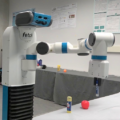
Robot advancements are critical for dangerous, inaccessible tasks that humans cannot perform. “You could send a robot to the moon or to deep-sea environments,” Tao said. “The human can still control it to do very subtle, dexterous tasks.” Possible applications of Tao’s research include robotic surgery, space exploration, disaster response, manufacturing, and healthcare.
“If robots are going to enter everyday life, safety and reliability are critical,” Tao concludes. “Our goal is to make robots intelligent, safe, and truly helpful to people.”
Chrissy Newton is a PR professional and the founder of VOCAB Communications. She currently appears on The Discovery Channel and Max and hosts the Rebelliously Curious podcast, which can be found on YouTube and on all audio podcast streaming platforms. Follow her on X: @ChrissyNewton, Instagram: @BeingChrissyNewton, and chrissynewton.com. To contact Chrissy with a story, please email chrissy @ thedebrief.org.