
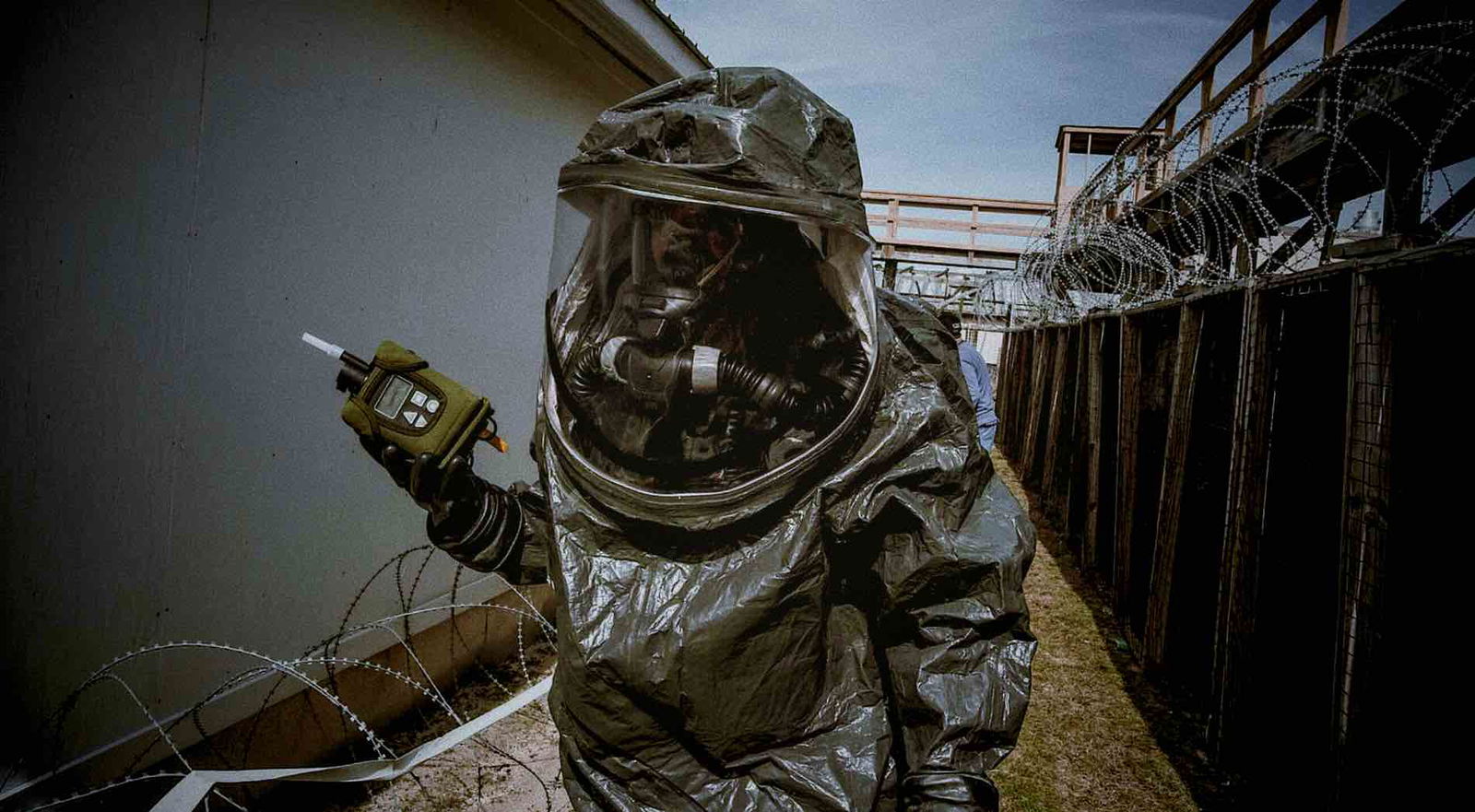
Welcome to this week’s installment of The Intelligence Brief… recently, the U.S. Department of Defense issued an update on a series of training exercises to enhance capabilities for finding the perpetrators in the aftermath of a nuclear attack. In our analysis, we’ll be looking at 1) the joint DoD-FBI training exercise federal authorities carried out in New York earlier this year, 2) new details the DoD has provided on the “Prominent Hunt” exercise, 3) how it aims to be more than just a detection capability, but also a deterrent against future attacks, and 4) how future training in the months ahead will add to the U.S.’s defense capabilities against possible nuclear threats.
Quote of the Week
“We’re looking for those radiological fingerprints, those things that are unique to different countries, to be able to point back to where the nuclear weapon came from.”
– Timothy Jacomb-Hood, Senior Science Adviser, Office of Nuclear Matters
RECENT NEWS from The Debrief
- News: This week, a concerning discovery at Finland’s Outokumpu drill hole is worrying scientists about carbon generation and nuclear waste storage. Elsewhere, analysis of artifacts from the Islands of Southeast Asia has revealed the use of advanced technology millennia before previously believed. Also, Texas scientists have used genetic engineering to produce a cold-adapted “woolly mouse” using woolly mammoth DNA. You’ll find links to all our stories at the end of this newsletter.
- Podcasts: This week on The Debrief Weekly Report, Kenna and Stephanie exercise their little grey cells as they turn to glass in the fires of Mount Vesuvius. Elsewhere, on The Micah Hanks Program, we dive into the heart of the 2019 Colorado drone mystery. You can get all our latest shows and past episodes on our Podcasts Page.
- Videos: On the latest episode of Rebelliously Curious, Chrissy Newton is joined by Richard Doty, a former U.S. Air Force counterintelligence officer infamous in UFO circles for his alleged involvement in disinformation operations. Be sure to check out more from The Debrief on our official YouTube Channel.
U.S. Strengthens Ability to “Find Nuclear Event Perpetrators”
On Wednesday, the U.S. Department of Defense (DoD) provided an update on a large-scale nuclear incident training exercise conducted in New York earlier this year.
The exercise, known as Prominent Hunt, led to speculation earlier this year following the publication of a news release by the Federal Bureau of Investigation (FBI), which participated in the training operation alongside several other agencies.
Characterized as “a large-scale, multi-agency nuclear incident training exercise,” the operation occurred around Schenectady, New York, between January 26-31, 2025. Officials said that New York residents should not be alarmed at the time, as the exercise would “not pose any risk” due to “training-related activity, including the presence of military personnel and aircraft, and people in protective equipment.”
Prominent Hunt
The recent iteration of Prominent Hunt was a large-scale nuclear forensics exercise designed to test the U.S.’s ability to collect and analyze evidence after a nuclear detonation. The operation, led by the FBI and the DoD, primarily focused on developing the U.S.’s ability to rapidly identify the source of a nuclear attack and provide crucial intelligence for national decision-making.
Prominent Hunt is part of an ongoing interagency effort to refine nuclear forensic techniques, with similar training exercises carried out by the FBI and DoD in partnership with other federal agencies in the past. Other participants in January’s round of exercises saw participation from the Department of Energy’s National Nuclear Security Administration (NNSA), the Army’s 20th CBRNE Command, and the Air Force Technical Application Center.
All these agencies contribute to the National Technical Nuclear Forensics Ground Collection Task Force, an interagency group primarily responsible for collecting debris samples from any potential nuclear detonation site. Samples retrieved by participating agencies are transported to DoD labs for analysis, which is a crucial step in determining the origins of any potential nuclear attack.
Determining the Source of a Nuclear Detonation
Should such a nuclear incident ever occur, forensic analysis will play a critical role in identifying the origin of any such weaponry used.
For instance, unique radiological “fingerprints” left behind from the use of elements like uranium or plutonium can reveal details like the country that produced the material, which grants intelligence officials key insights into questions like whether a state actor, a terrorist group, or some other entity carried out the attack.
Beyond simply identifying the possible perpetrators in the aftermath of a nuclear attack, the DoD said on Wednesday that U.S. agencies publicly demonstrating such forensic capabilities serves as a deterrent to any would-be adversaries planning such attacks.
“National technical nuclear forensics is absolutely a part of nuclear deterrence by messaging to our adversaries that the United States government has the capability, should there be a nuclear detonation,” said Brian Kohler, director of Nuclear Forensics, Energy, and Survivability at the DOD’s Office of Nuclear Matters, in a statement this week, emphasizing that adversaries must recognize that no nuclear attack will go untraceable.
“These technical skills and tools deny potential perpetrators—including state sponsors of terrorism—anonymity and ensure they will be held fully accountable,” added Wendin Smith, the NNSA’s associate administrator and deputy undersecretary for counterterrorism and counterproliferation.
Preparing for “Alternative Threats”
Although nuclear attacks are often associated with missile strikes or explosives used by hostile nations, Prominent Hunt’s main focus involved “alternative” threats that include those posed by terrorist organizations or rogue states, which are more likely to rely on using improvised nuclear devices.
Improvised devices are more likely to be used by such groups since their components can more easily be smuggled into a major population area rather than requiring a launch mechanism. In addition to making the devices less easily detectable before their use, the DoD emphasized on Wednesday that their origins are also less easily traced to any specific nation.
Given the challenges such devices present to U.S. agencies, forensic evidence becomes crucial in helping determine where any such weapon may have come from and how perpetrators got it there. At the heart of this effort is the requirement for collecting on-the-ground data from the detonation site, without which intelligence agencies would face the difficult task of attempting to trace the origins of nuclear devices back to their originators.
Exercises undertaken during Prominent Hunt included training forensic teams to work rapidly to collect radioactive debris from an affected area using models that help predict where debris is likely to fall. This incorporates weather data, as well as explosion yield based on the device’s size and surrounding area and the estimated altitude of the explosion.
These models, developed by teams at the Air Force Technical Applications Center, help forensic scientists pinpoint the best collection sites, directing teams from the 20th CBRNE Command to retrieve diverse samples for laboratory analysis. Additional evidence may be gathered in the form of airborne debris. At the same time, satellite surveillance capabilities can also be leveraged to help track where materials may be found in the aftermath of a nuclear attack.
Validating Readiness Through Repeated Exercises
The DoD is expected to publish an after-action review of January’s training operation in the weeks ahead. Meanwhile, a second series of training exercises under Prominent Hunt has already been scheduled for later in 2025, and the DoD expects it to take place in August.
Additionally, the Defense Threat Reduction Agency (DTRA) will participate in planning the exercises, allowing the Office of Nuclear Matters to focus more on oversight and guidance.
Drew Walter, deputy assistant secretary of defense for nuclear matters, said that the recent Prominent Hunt exercise successfully validated the task force’s ability to collect and analyze nuclear debris.
“Our DOD team demonstrated their readiness to collect forensics-quality debris samples, working with their FBI and NNSA partners,” Walter said this week.
“Our ability to gather post-detonation debris and perform nuclear forensics analysis is a key element of our nuclear deterrent,” he added.

That concludes this week’s installment of The Intelligence Brief. You can read past editions of our newsletter at our website, or if you found this installment online, don’t forget to subscribe and get future email editions from us here. Also, if you have a tip or other information you’d like to send along directly to me, you can email me at micah [@] thedebrief [dot] org, or reach me on X: @MicahHanks.

Here are the top stories we’re covering right now…
- This is Your Brain on Microplastics: Scientists Warn of Alarming Rise in Brain Microplastic Levels
Alarming levels of microplastics discovered inside the human brain might be directly affecting its proper operation.
- How Adaptive LiDAR Could Revolutionize Autonomous Farming
Researchers unveil new adaptive LiDAR system that could revolutionize agriculture and make autonomous farming a reality.
- Blue Origin’s All-Female Crew: Exploring the Emotional Impact of Looking Back at Earth from Space
With the announcement of Blue Origin’s all-female crew for the upcoming NS-31 mission, we explore the profound emotional and psychological impact of space travel on astronauts.
- Is Solar Activity Driving Earthquakes? New Research Suggests a Correlation Between the Sun and Seismic Events
Japanese scientists have discovered new significant correlations between solar activity and earthquakes, according to recent research.
- Hydrogen Breakthrough: New Palladium Nanosheet Tech Could Accelerate Green Energy Revolution
Japanese scientist’s new hydrogen energy breakthrough replaces expensive platinum, drastically reducing the cost of clean fuel production.
- Hidden at the Bottom of a 2,516 Meter Hole in Finland, Scientists Made a Volatile Organic Discovery
Poor air quality markers were discovered in Finland’s Outokumpu drill hole, marking concerns for carbon generation and nuclear waste storage.
- Study Yields New Evidence of Advanced Technology Use Over 40,000 Years Ago
An analysis of artifacts from the Islands of Southeast Asia has revealed the use of advanced technology millennia before previously believed.
- Introducing the ‘Woolly Mouse’: Colossal Biosciences Unveils Its Latest Breakthrough in De-Extinction Technology
Colossal Biosciences has used genetic engineering to produce a cold adapted woolly mouse using woolly mammoth DNA.
- Scientists Solve Centuries-Old Mystery of Why Hot Droplets Rebound Off Cool Surfaces
Scientists say hot droplets on cool surfaces show properties similar to the Leidenfrost effect, potentially advancing fire proof materials.
- Antarctic Ice Loss Could Mean Extreme Slowing of Earth’s Strongest Ocean Current by 2050
The Antarctic Circumpolar Current (ACC) is slowing due to melting Antarctic ice sheets, potentially compounding climate concerns.
- 2,700-Year-Old Meteorite Jewelry Unearthed in Poland Reveals Ancient Connection to the Cosmos
New research has revealed artifacts recovered from ancient Polish burial sites included pieces forged from rare extraterrestrial iron.
- Star Trek-Style Life Detector Successfully Finds Microbial Life in Mars Rock Analogue
A Star Trek-style life signs detector has successfully detected ancient microbial life in gypsum rocks similar to rocks on Mars.
- Flat is the Future for Optic Lenses, Radically Altering How Telescopes Work
For centuries, the optic lens has bent light through translucent, curved material, but now flat lenses are reimagining the technology.
- Richard Doty: Disinformation, Paul Bennewitz, and UAP Whistleblower Fallout
In this episode, Chrissy Newton is joined by Richard Doty, a former U.S. Air Force counterintelligence officer infamous in UFO circles for his alleged involvement in leaking disinformation.
- Interstellar Objects: Oumuamua, Borisov, and the Case for Studying Visitors from the Stars
New research suggests that interstellar objects like ‘Oumuamua and Borisov arrive near Earth far more frequently than previously thought.
- New Legislation Aims to Make Legendary Humanlike Creature California’s Official ‘Cryptid’
A new assembly bill introduced in California seeks to recognize a legendary humanlike creature as the state’s official “cryptid.”
- Lunar Trailblazer and IM-2: NASA’s Latest Missions Target Moon’s Mysterious South Pole
NASA’s latest technology advances are on their way to the Moon, poised to answer lingering questions ahead of the next crewed lunar landing.
- The Science of Becoming an Elite Special Forces Solider: New Study Reveals What It Takes to Make the Cut
A new study by the U.S. Army Research Institute reveals the science behind who makes the cut to become an elite Special Forces soldier.
- DOJ Set to Release Epstein-Related Flight Logs and Names, Attorney General Says
This week, new documents related to the alleged “client list” of Jefferey Epstein may soon be released by the U.S. Justice Department.
- In Pursuit of Forbidden Science
This week, computer scientist and internet pioneer Jacques Vallee joins the program to discuss his new book “Forbidden Science 6: Scattered Castles.”
- Mind-Shattering Discovery Reveals How a Human Brain Turned to Glass in the Ancient Eruption of Mount Vesuvius
An individual who perished in the Mount Vesuvius eruption of 79 CE had his brain turned to glass under a unique set of conditions.
- Microbial Research Aboard the International Space Station Suggests Astronauts Need to Get Their Hands Dirty
The International Space Station may be too clean for astronauts’ own good, allowing hostile microbiota to flourish.
- Sustainability Hack for Recycling Lithium-Ion Batteries Makes Mixing Oil And Water a Good Thing
Scientists at the University of Leicester have discovered a new sustainability hack with a simple way to recycle lithium-ion batteries.
- Harvard Engineers Develop Springtail-Inspired Micro-Robot Capable of Leaping 23 Times Its Body Length
Harvard engineers have developed a micro-robot based on the springtail insect that is capable of leaping 23 times its body length.