

A test launch from Cape Canaveral Space Force Station on Friday is believed to have involved America’s secretive new “Dark Eagle” Hypersonic missile.
The undisclosed launch drew attention late last week after the Federal Aviation Administration issued a temporary flight restriction (TFR) prohibiting aircraft from operating without permission due to “Space Operations.”
It was also revealed that the U.S. National Geospatial-Intelligence Agency (NGA), the intelligence community’s primary source of location-based intelligence, had also issued a navigational advisory involving “hazardous operations” related to rocket launches for the dates of April 25 through April 27 from Cape Canaveral.
A subsequent statement issued by the Department of Defense confirmed that a test had been carried out at Cape Canaveral.
“A combined team of government, academic and industry partners conducted a test on behalf of the Department of Defense from a test site at Cape Canaveral Space Force Station,” the statement read.
“We are currently evaluating the results of the test,” the statement, first obtained by Florida Today, read.
Images appearing online shortly afterward appeared to show the missile test launch from Cape Canaveral, captured by Florida-based photograher Jerry Pike.
Liftoff of the LRHW Dark Eagle this morning 🚀 https://t.co/lCJhUXxT84 pic.twitter.com/YJXXuSxmJK
— Jerry Pike (@JerryPikePhoto) April 25, 2025
Last week’s test launch occurred after the Pentagon officially revealed the new name of its secretive hypersonic weapon as “Dark Eagle” on Thursday. The weapon’s new popular designation, which had already been used in reference to the missile for more than a year, was announced followed successful end-to-end flight tests that occurred late last year.
Drawing inspiration from its eponymous avian predator, a DoD statement issued last week said that the Long-Range Hypersonic Weapon (LRHW) possesses a “combination of velocity, accuracy, maneuverability, survivability and versatility,” while incorporation of the word “dark” helps to embody the weapon’s “ability to dis-integrate adversary capabilities, including anti-access/area-denial systems, communications capacity, long-range fires and other high-payoff/time-critical targets.”
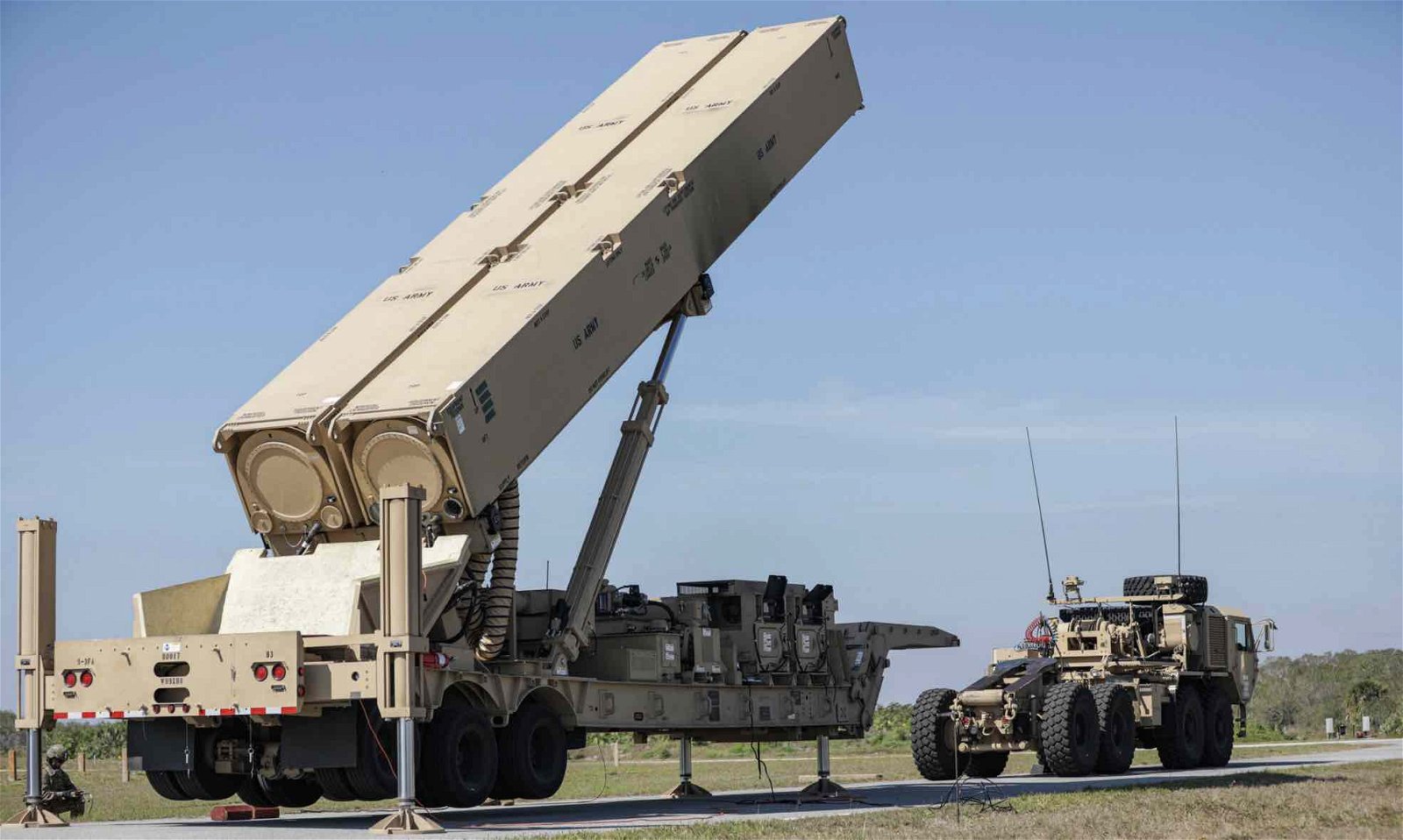
Patrick Mason, senior official performing the duties of the Assistant Secretary of the Army for Acquisition, Logistics and Technology, said America’s new hypersonic arsenal will strengthen deterrence by complicating decision making for the enemy, adding that the new weapon’s speed, accuracy, and overall lethality “are befitting its new popular name, Dark Eagle.”

Last March, The Debrief reported that the U.S. Navy was preparing to test the new hypersonic weapon, developed in partnership with the U.S. Army, as part of the LRHW program. The tests focused on the Common Hypersonic Glide Body (C-HGB) propelled by a Navy booster, capable of traveling at Mach 5 or faster.
Referred to informally as the Dark Eagle hypersonic missile system at that time, it was believed the new weapon can strike targets across distances of as much as 1,700 miles, while reaching speeds exceeding 3,800 mph.
Developed with support from Dynetics and Lockheed Martin, the LRHW program was expected to greatly enhance the U.S. military’s ability to counter similar hypersonic advancements by Russia and China, despite previous delays and setbacks.
Although earlier tests scheduled for September 2023 had been scrubbed, successful tests were conducted last December by the Army’s Rapid Capabilities and Critical Technologies Office in collaboration with the Navy Strategic Systems Programs, and Dark Eagle is set to become operational within the Army’s Strategic Long-Range Fires battalions.
“The use of a common hypersonic missile and joint test opportunities allow the services to pursue a more aggressive timeline for delivery and to realize cost savings,” the DoD said last week.
Micah Hanks is the Editor-in-Chief and Co-Founder of The Debrief. He can be reached by email at micah@thedebrief.org. Follow his work at micahhanks.com and on X: @MicahHanks.