

The SETI Institute is expanding the search for extraterrestrial intelligence to a broader group of budding scientists by engaging community colleges in hands-on research.
ARISE Lab is a new project launched through a grant from the Amateur Radio and Digital Communication Foundation (ARDC). The initiative brings students and community college instructors into SETI’s scientific efforts, providing experiential learning in radio science, digital signal processing, and astronomy.
Looking for Alien Life with SETI
A popular topic among students, the SETI Institute was founded in 1984 as a nonprofit organization dedicated to the search for extraterrestrial life and public education about life in the universe. While SETI frequently collaborates with NASA, the National Science Foundation, and academic institutions on its mission, ARISE serves as an extension of its public outreach efforts.
“Hands-on experiences are proven to improve student engagement and retention,” said Dr. Vishal Gajjar, project lead and radio astronomer at the SETI Institute. “With ARISE, we’re combining cost-effective tools like GNU Radio with one of the most captivating topics in science — the search for life beyond Earth — to spark curiosity and build skills across STEM disciplines.”
Gajjar led the development of the ARISE curriculum, which emphasizes student access to real-time data from SETI’s Allen Telescope Array—the world’s first and only radio observatory dedicated to the search for technosignatures. These are potential indicators of alien technology, signaling the presence of life and intelligent civilizations capable of manipulating their environment.
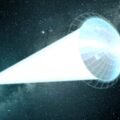
One example of a technosignature is the search for a Dyson sphere—a hypothetical structure that could surround a star to harness its energy for use by an advanced species. Although some potential Dyson sphere candidates have been observed, none have been confirmed. Using real-world data, ARISE participants will learn to identify and analyze signals as part of the program.
Breaking Down the Search
ARISE’s curriculum is divided into conceptual learning modules and hands-on lab exercises. Modules introduce key concepts through notes, slides, readings, and manuals, while the labs apply this knowledge through guided, practical activities using lab manuals and pre-lab readings.
Last year, ARISE launched a pilot program at Northern California’s Hat Creek Radio Observatory to test the new format with citizen scientists. Following a successful trial, the curriculum was expanded to include 15 additional labs covering astronomy, digital communications, signal modulation, and data science. To support implementation, ARISE will host two instructor training workshops at Hat Creek and provide on-site lab experiences at 10 community colleges joining the program.
“Whether it’s detecting a signal from a Mars orbiter or analyzing pulsar data, students are gaining real experience with tools used in both professional astronomy and industries,” said Joel Earwicker, the project’s lead research assistant. “It’s about making science feel real, relevant, and achievable.”
Joining ARISE
Community college instructors interested in attending the next ARISE workshop—scheduled for June 25–27 at Hat Creek Radio Observatory—can apply through May 13. Travel and lodging support is available. In addition to collaborating with fellow educators, attendees will have the opportunity to try out lab activities, tour the site, and participate in live observations.
Beginning June 2, ARISE will also host virtual workshops on the first Monday of each month from 11 a.m. to 12 p.m. PDT. These sessions will provide updates on new lab activities and offer a platform for instructors to share their experiences implementing the program at their institutions.
Ryan Whalen covers science and technology for The Debrief. He holds an MA in History and a Master of Library and Information Science with a certificate in Data Science. He can be contacted at ryan@thedebrief.org, and follow him on Twitter @mdntwvlf.