

Experiments exploring the viability of ‘pink’ noise machines designed to improve sleep quality suggest such devices may instead interrupt restorative rapid-eye-movement (REM) sleep rhythms, resulting in poorer sleep quality overall.
Conversely, the research team that conducted the experiments found that traditional earplugs were measurably more effective at protecting sleep quality from traffic noise than pink noise machines.
The study’s conclusions cast doubt on the effectiveness of certain sleep aids and explicitly caution parents against using pink noise machines for children whose developing brains may be adversely affected by such devices.
Pink Noise and the Different ‘Colors’ of Sleep Sounds
Sleep noise machines come in several varieties, separated by the ‘color’ of the sounds produced. Early devices that used a generic sound were termed “white noise” machines. More recently, sleep aids have come in several other colors, such as brown, blue, and pink.
According to a press release announcing the new study, the various noise colors differ in their “energy content across the audible spectrum,” ranging from high to low-pitched tones. One increasingly common type of sleep aid emits “pink noise.” These machines emit audible, more balanced, lower-frequency sounds that are described as consistent and ambient.
In the release, the researchers described ‘pink’ as a noise that “sounds uniform and static-like.” Some examples of pink noise include steady rain, rustling leaves, or a gentle waterfall. As a result, millions of people use broadband sounds like pink noise during sleep every night.
According to the study authors, a quick review of Spotify data revealed that 3 million hours of white- and ambient-noise podcasts are used daily, often marketed as sleep aids. The tea also found that the top five “white nose” prompted videos on YouTube have been viewed over 700 million times combined. Still, they note, research on the effectiveness and potential risks of these increasingly popular sleep support tools “remains scarce.”
According to Mathias Basner, MD, PhD, professor of Sleep and Chronobiology in Psychiatry and the lead author of the study, REM sleep plays a critical role in memory consolidation, emotional regulation, and healthy brain development. The professor also noted that people go through multiple cycles of deep sleep and REM sleep throughout the night. When sleep is uninterrupted, this complementary system of REM and deep sleep can ensure people wake up feeling well-rested and physically restored.
“Deep sleep is important for physical restoration and for clearing toxins from the brain,” the researchers explain. “REM sleep, also called dream sleep, is important for emotional regulation, for motor skills, and for brain development.
Experiments Reveal Reduced Sleep Length and Quality
To test the efficacy of pink noise, the research team recruited 25 healthy adults aged 21 to 41. Notably, none of the participants reported prior use of a noise machine. The subjects also reported no history of sleep disorders.
Over seven consecutive nights, the study subjects slept for eight hours in a laboratory where the research team could monitor them. During each volunteer’s sleep cycle, they were exposed to different sound conditions. This included exposure to aircraft sounds, pink noise, or a combination of the two. They were also exposed to aircraft noise while wearing earplugs.
When the study subjects awakened, they completed tests and surveys designed to measure sleep quality and alertness. The subjects were also tested for general health after each sleep session.
After the seven-day cycle was complete, the study authors checked the results. Based on participant responses, aircraft noise exposure resulted in 23 fewer minutes per night of ‘N3’ sleep, which is the deepest stage of sleep, compared to no noise. When subjects used earplugs to reduce the aircraft noise, the researchers said the drop in deep sleep was reduced “to a large extent.”
When the study authors examined the effects of pink noise, they found little effect on deep sleep. However, the presence of pink noise alone at 50 decibels, which the study authors compared to the sound of moderate rainfall, was associated with a reduction in REM sleep of nearly 19 minutes.
The combination of aircraft noise and pink noise appeared even more harmful, reducing the duration of both deep and REM sleep compared to noise-free environments. The combined noises also reduced the overall sleep duration by an average of 15 minutes, a reduction the researchers note had not been observed during sleep sessions with either pink noise or aircraft noise alone.
When asked about their overall sleep quality, the study participants rated it worse when exposed to either type of noise than when sleeping with no noise. They also reported feeling their sleep was lighter and waking up more frequently. Notably, these problems were reduced or eliminated when the study subjects wore earplugs.
Study Findings Caution Against Using Sleep Noise Machines Near Young Children
When discussing the study’s results, Basner and colleagues highlighted the apparent benefits of wearing earplugs and noted that around 16% of Americans currently use earplugs during sleep. They also noted that their findings suggest further study is needed to determine if pink noise and other colors marketed as sleep aids are effective or potentially deleterious to the length and quality of deep sleep, REM sleep, and total sleep.
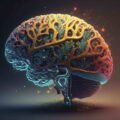
The results, the researchers said, suggest not only that earplugs—which are used by as many as 16 percent of Americans to sleep—are likely effective, but also that the overall health effects of pink noise and other types of broadband noise “sleep aids” need to be studied more thoroughly.
“[Our results] indicate that we need more research in vulnerable populations, on long-term use, on the different colors of broadband noise, and on safe broadband noise levels in relation to sleep,” Basner said.
The researcher said the team’s findings also “caution against” the use of pink noise around young children or newborns.
“Our findings suggest that playing pink noise and other types of broadband noise during sleep could be harmful—especially for children whose brains are still developing and who spend much more time in REM sleep than adults,” Basner said.
The study “Efficacy of pink noise and earplugs for mitigating the effects of intermittent environmental noise exposure on sleep” was published in the journal Sleep.
Christopher Plain is a Science Fiction and Fantasy novelist and Head Science Writer at The Debrief. Follow and connect with him on X, learn about his books at plainfiction.com, or email him directly at christopher@thedebrief.org.