

New research from MIT suggests that brainwaves sweep across the cerebral cortex much like radar scans the sky, helping the brain detect unexpected visual anomalies.
Neuroscientists at MIT’s Picower Institute for Learning and Memory, led by Hio-Been Han in Professor Earl K. Miller’s lab, made the discovery while studying how the brain stores and processes visual information in the short term—a process known as visual working memory.
The Cortex
The cerebral cortex maps what the brain perceives in space. When we focus on our surroundings, theta-frequency waves sweep across them, searching for visual anomalies that might demand attention. Using animal subjects, the researchers sought to understand why performance in visual working memory tasks varies and why memory capacity appears limited.
Their work builds on previous studies identifying theta waves as being strongly correlated with attention—particularly during tasks requiring the brain to track multiple points at once. Miller’s earlier research supported the theory that different brainwave frequencies act as carriers for distinct forms of neural computation. The new study takes this a step further, revealing how those traveling waves may actively drive such computations.
“It shows that waves impact performance as they sweep across the surface of the cortex,” said Professor Miller, also of MIT’s Department of Brain and Cognitive Sciences. “This raises the possibility that traveling waves are organizing, or even performing, neural computation.”
Brainwaves and Video Games
For their experiments, the team trained animals to play a simple video game: an array of colored squares appeared briefly on-screen, followed by a second array in which one square had changed color. The animals’ task was to look at the altered square as quickly as possible. Researchers tracked their eye movements and reaction times while recording brainwave activity in the frontal eye fields—a region of the cortex responsible for mapping visual information from the retina.
After analyzing hundreds of trials, the researchers found that both theta brainwave activity and the vertical location of the changed square were strongly correlated with how accurately and quickly the animals detected changes. Certain horizontal bands of the cortex appeared tuned to specific theta frequencies, meaning that a subject’s performance depended on whether the brain’s internal rhythm aligned with the position of the visual change.
“The optimal theta phase for behavior varied by retinotopic target location, progressing from the top to the bottom of the visual field,” the researchers wrote in Neuron. “This could be explained by a traveling wave of activity across the cortical surface during the memory delay.”
Continuing to Understand Visual Scanning
From this data, the team concluded that the brain’s ability to spot visual changes follows a distinct rhythm. The closer a visual change occurred to a band’s optimal theta phase, the faster it was recognized. The team says continued research will be needed to understand how this rhythmic mechanism evolved.
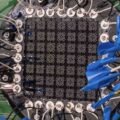
The researchers also observed interactions among other frequency bands that reinforced their model of wave-driven computation. Earlier work from the Miller Lab showed that alpha waves help encode task context, while beta waves regulate how gamma waves encode sensory input. The new study adds that theta waves appear to modulate both beta and gamma, synchronizing neural activity across regions. When theta waves became excited, beta activity was suppressed and spikes in neural firing—associated with visual processing—peaked. As theta waned and beta strengthened, spiking decreased.
Going forward, the team is now developing a closed-loop analog feedback system designed to amplify specific brainwave frequencies. Their long-term goal is to enhance visual memory capacity by strengthening theta wave power.
The paper, “Working Memory Readout Varies with Frontal Theta Rhythms,” appeared in Neuron on October 20, 2025.
Ryan Whalen covers science and technology for The Debrief. He holds an MA in History and a Master of Library and Information Science with a certificate in Data Science. He can be contacted at ryan@thedebrief.org, and follow him on Twitter @mdntwvlf.