

The remnants of a 1,700-year-old heating system were recently discovered by archaeologists at an ancient site in Turkey, highlighting the use of advanced Roman-era engineering in the region.
The discovery was made following a farmer’s discovery near the village of Salkaya in Turkey’s Elazığ Province in 2023. At that time, the farmer located portions of a mosaic while planting trees, which ultimately led to the Ministry of Culture and Tourism launching an excavation at the site.
Further investigations revealed the remnants of an ancient Roman bath, which, it was revealed last August, relied on one of the Roman era’s most unique inventions for heating: the hypocaust.
The Hypocaust: Advanced Engineering in the Roman World
One of the many engineering marvels of antiquity, the hypocaust was a Roman version of central heating that worked by moving hot air beneath an area, such as a space within the floor under a room.
Similar approaches also saw the use of pipes to carry hot air through walls in a structure. The Romans were also known for building advanced sewer systems, as well as for employing novel construction methods such as concrete that bears properties which have eluded modern scientists until recent years.
Historical records reveal the use of the hypocaust system at least as early as 350 BC, where it is known to have been used to provide heat at the Temple of Ephesus. However, in his exhaustive treatise on architecture, the Roman architect and military engineer Marcus Vitruvius Pollio attributed the invention of the hypocaust to Sergius Orata in the 1st century BC.
Radar Reveals a Rare Discovery
Based on scans at the location using ground-penetrating radar, evidence of a hypocaust beneath a Roman hot bath was found, including the characteristic short brick support structures known as suspensurae, which are commonly found in association with these early heating systems.
Emre Çayır, who led the excavations at the site, called the discovery “one of the defining features of Roman architecture,” adding that the discovery “highlights the advanced engineering of the period.”
Elazığ’da bir tarlada, alttan ısıtmalı, soğuk, ılık ve sıcak bölümleri, terleme odaları, havuzlar ile temiz ve atık su kanallarının yer aldığı Roma dönemine ait 1700 yıllık bir hamam bulundu. pic.twitter.com/PjmkD666eg
— Prof. Dr. Güner Sönmez (@DrGunerSonmez) July 15, 2025
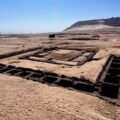
Notably, the discovery marks the first known instance of a Roman bathhouse in this region of Turkey. Its presence alone points to a level of advancement and sophistication that once would have existed there, pointing to the existence of a once-thriving Roman settlement.
Future Efforts to Reveal Elazığ Province’s Past
According to Çayır, the bathhouse and its heating system could also mean that the excavation site had once existed near a town center—a possibility he hopes that additional excavations may help to confirm.
Although a rare discovery for locations like the Elazığ Province, similar discoveries have been made at famous archaeological sites like Pompeii, and also in more distant countries like the United Kingdom.
Çayır says the team’s current efforts remain focused “on protecting this cultural heritage and transmitting it to the future,” adding that the bathhouse and its hypocaust system “is a direct testimony to Roman daily life and architectural ingenuity.”
Micah Hanks is the Editor-in-Chief and Co-Founder of The Debrief. A longtime reporter on science, defense, and technology with a focus on space and astronomy, he can be reached at micah@thedebrief.org. Follow him on X @MicahHanks, and at micahhanks.com.