
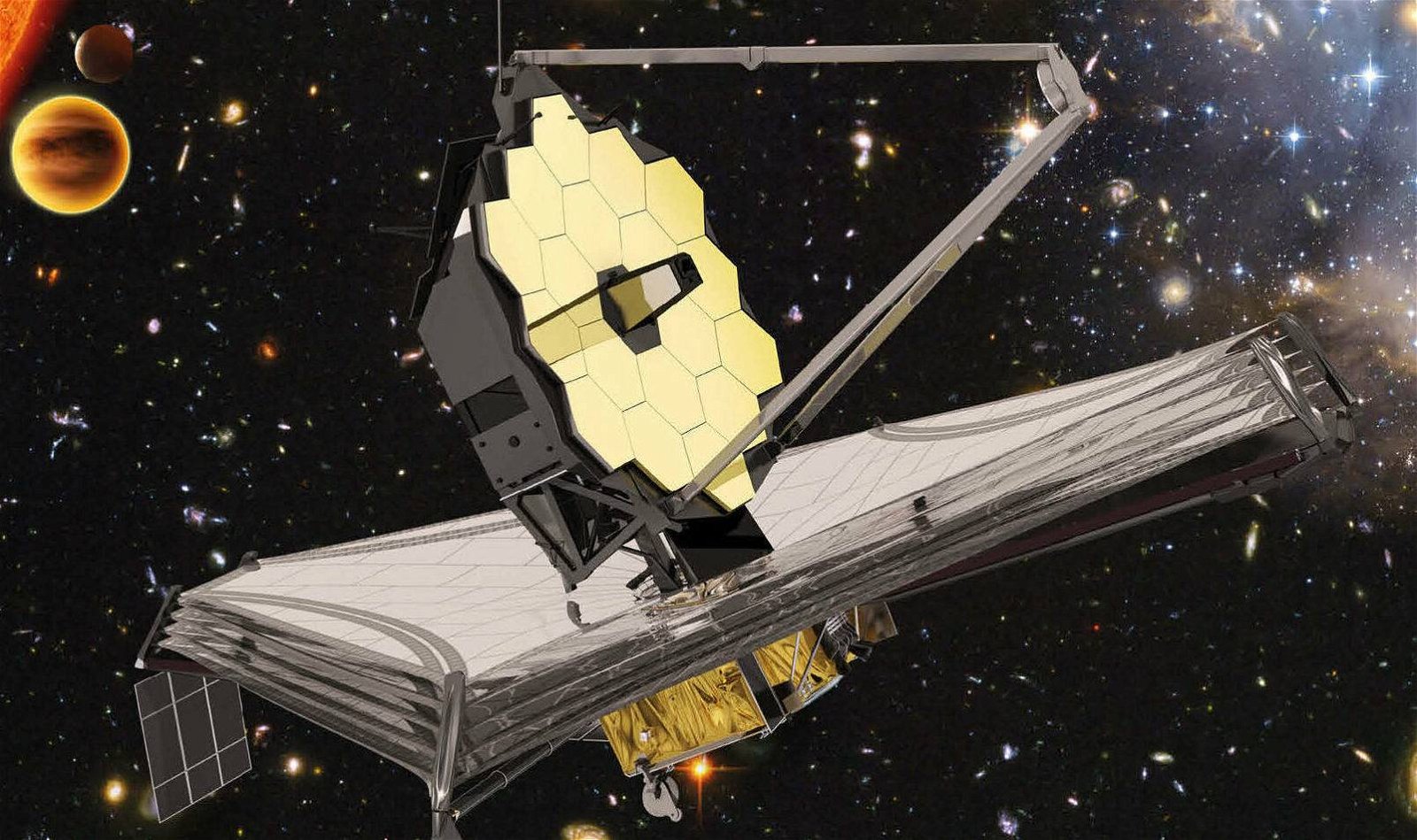
This week in news from The Debrief, new observations from the James Webb Space Telescope have revealed a distant Milky Way-like galaxy, Alaknanda, whose existence challenges current models of galactic formation. Meanwhile, archaeologists working with digital reconstruction techniques have uncovered long-hidden architectural features in Pompeii—including a curious staircase that led to the identification of previously unknown sections of the ancient city. And in the realm of human experience, researchers at the University of Virginia have released the first major study examining how individuals who report near-death experiences can be better supported, highlighting clinical gaps and the importance of validation in their recovery.
Here’s a look at all the stories we’re covering this week at The Debrief…
New Warp-Drive Propulsion Concept Moves Fictional Starships Closer to Engineering Reality: A new warp-drive study proposes a novel segmented design that brings hyper-fast space travel one step closer to becoming a reality.
Human Evolution Is Falling Out of Sync With Modern Life, New Research Warns: A new study warns modern life may undermine key human survival traits, from fertility to cognition, as environmental pressures intensify.
A Surprising Antidepressant? How Laughing Gas Is Emerging as a Rapid Treatment for Severe Depression: New research shows Laughing Gas can ease depression within hours, though questions remain about its safety and lasting benefits.
Your Brain Rewrites Your Memories Each Time You Recall Them, New Study Finds: A recent neuroscience review questions the long-held belief that memories are unchanging records of past events.
Is TRAPPIST-1e Really Habitable? New Study Suggests This Promising Candidate for Life May Be Something Else Entirely: TRAPPIST-1e may be the long-sought-after habitable, Earth-like exoplanet astronomers have been looking for in the search for ET.
Study Shows Today’s Top AI Models Struggle With Visual Reasoning—Raising Concerns for Real-World Use: New study reveals top AI models still struggle with visual reasoning, exposing hidden weaknesses in today’s multimodal systems.
Scientists Trace the Mysterious Origins of These Critical Life-Supporting Elements to the Death of an Ancient Star: Scientists have found an “extreme” solution to the mysterious origins of critical life-supporting elements chlorine and potassium.
Volcanoes, Famine and Grain Ships: How Climate‑Driven Trade May Have Brought the Black Death to Europe: Climate‑driven shifts due to volcanic activity, and the increase in grain trade helped bring the Black Death to Italian ports in 1347 and turned a regional disease into a continent‑wide catastrophe.

Scientists Discover Monkeys Can Keep a Beat—Challenging a Major Theory of Human Evolution: A new study shows monkeys can perceive and sync to a musical beat, challenging assumptions about rhythm, evolution, and cognition.
“We Need to Rethink What’s Possible:” This “Fire Amoeba” Proves Complex Life Can Survive New Extremes: Scientists have discovered a “fire amoeba” capable of surviving temperatures typically impossible for complex life.
“I Immediately Knew It Was a New Species”: Scientists Discover a New Ancient Winged Reptile, and Reveal its Gruesome Fate: When this researcher first laid eyes on a fossil, she instantly realized it was a new dinosaur species that had likely died a gruesome death.
New DMT Study Reveals How the Brain Loses Its Sense of Self Under the Psychedelic Compound’s Influence: A new neuroscience study reports that the psychedelic compound DMT disrupts a key brain rhythm linked to self-awareness.