
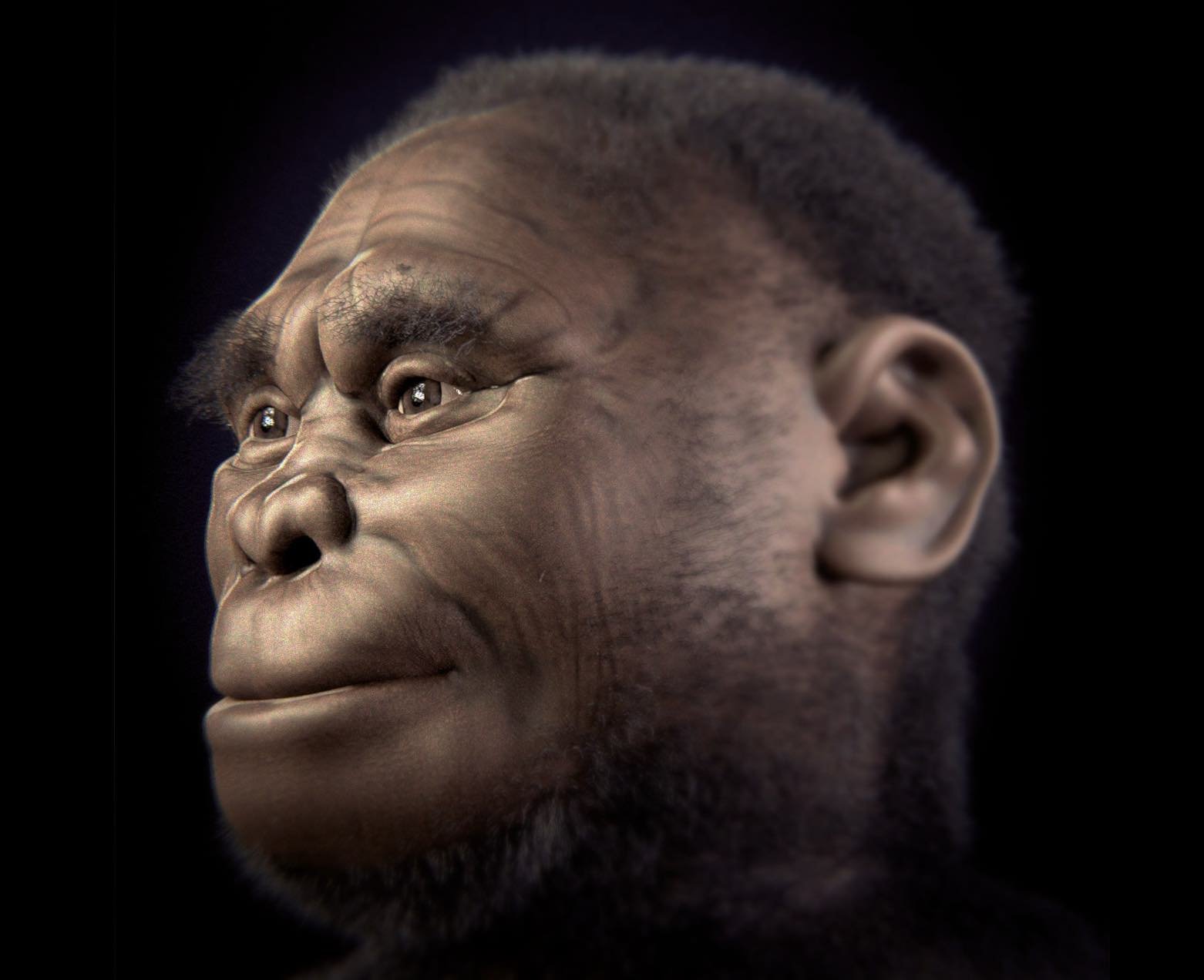
Homo floresiensis, the diminutive early human species known from fossils recovered at Liang Bua cave, endured centuries of increasingly severe drought on their home island of Flores, according to new research.
As rainfall dropped, rivers shrank and the ecosystem changed, making food and water harder to find. The recent climate study from the University of Wollongong, published in Communications Earth & Environment, points to long-term drying as a primary reason for the species’ decline about 61,000 years ago.
The findings address a longstanding question in human evolution. Homo floresiensis, sometimes referred to as “hobbits“ due to their short stature, lived in Liang Bua for about 140,000 years before disappearing from the fossil record. Researchers have debated whether climate, competition, or contact with modern humans was responsible for their disappearance.
The new study points to water scarcity as the initial cause, affecting both the hobbits and the species in their environment on which they depended for survival.
A Drying World
An international team of scientists analyzed stalagmites from the Liang Bua cave alongside isotopes preserved in the teeth of Stegodon florensis insularis, a pygmy elephant species that the hobbits hunted. Stalagmites act as natural climate archives, recording changes in rainfall. Tooth enamel captures the isotopic signature of the water consumed by that animal.
Both sets of data show the same trend. Flores started drying out about 76,000 years ago, with the worst drought occurring between 61,000 and 55,000 years ago. This period aligns with the time when Homo floresiensis disappeared from the area.
“The ecosystem around Liang Bua became dramatically drier around the time Homo floresiensis vanished,” said University of Wollongong Honorary Professor Dr. Mike Gagan. “Summer rainfall fell, and river-beds became seasonally dry, placing stress on both hobbits and their prey.”
As freshwater became less available, Stegodon populations declined. Isotopic data indicates that these pygmy elephants depended on river water, which was increasingly scarce during the drought. Their decline occurred at the same time that Homo floresiensis also began to disappear from the archaeological record.
“Surface freshwater, Stegodon and Homo floresiensis all decline at the same time, showing the compounding effects of ecological stress,” University of Wollongong Honorary Fellow Dr. Gert van den Bergh said. “Competition for dwindling water and food probably forced the hobbits to abandon Liang Bua.”
Ecological Collapse
Homo floresiensis was first discovered in 2003 in Liang Bua. The species had a small brain, stood about a meter tall, and showed a combination of primitive and advanced features. Their disappearance, between 50,000 and 60,000 years ago, has been difficult to explain.
The new climate data provides important context. As drought conditions worsened, Homo floresiensis likely had less access to water sources and Stegodon hunting grounds. Without a reliable freshwater supply, the Liang Bua cave may not have been suitable for year-round occupation.
Humans and Hobbits
Another factor is the movement of modern humans in the region. Although Homo floresiensis fossils are older than the earliest evidence of Homo sapiens on Flores, modern humans were present elsewhere in the Indonesian archipelago when the hobbits left Liang Bua.

“It’s possible that as the hobbits moved in search of water and prey, they encountered modern humans,” Dr Gagan said. “In that sense, climate change may have set the stage for their final disappearance.”
The study does not confirm direct contact between the two species, but the timing suggests that ecological changes may have increased the chances of interaction.
A Climate-Driven Extinction
The researchers combined geological records with fossil-isotope data to reconstruct the climate of Liang Bua. Their results show how environmental stress affected the food web and influenced the survival of Homo floresiensis.
The evidence suggests that the disappearance of Homo floresiensis was a gradual process. As water resources dwindled and prey populations declined, the environment could no longer sustain the species. Over time, the last hobbits vanished from the region.
Austin Burgess is a writer and researcher with a background in sales, marketing, and data analytics. He holds a Master of Business Administration and a Bachelor of Science in Business Administration, as well as a certification in Data Analytics. His work combines analytical training with a focus on emerging science, aerospace, and astronomical research.