

New analysis of ancient frozen Greenland rubbish heaps, called middens, has revealed new insights into several ancient societies that have passed through the country over the last five millennia. The findings include insights into ancient diseases and animals that the inhabitants kept but didn’t eat.
Although the team noted the potential risk that climate change could release dangerous ancient microbes into the modern environment, their analysis found little evidence that the pathogens they identified could pose a threat beyond the immediate area around the middens.
Ancient Middens Offer Historical Insights Beyond Traditional Artifacts
Archaeologists have often excavated items discarded by ancient societies from trash heaps to learn more about the people who lived there. Although such excavations often unearth things like animal bones and mollusk shells, offering insights into diet and hunting habits, these ancient rubbish heaps can also contain human artifacts, such as discarded blades and other tools.
In a country like Greenland, where different peoples have settled the region since 2,500 BCE, the ancient middens may also contain microbes that could offer researchers an entirely different type of historical data. For example, microbial data from middens could reveal which diseases ancient populations had to survive. The team notes that microbes could also help determine what ancient societies kept “but perhaps didn’t eat.”
Still, studies of ancient midden microbes are limited, leaving a gap in historical knowledge. The authors of the new paper also highlight that rapidly increasing Arctic warming could release infectious diseases to which humans have lost immunity over the ensuing generations.
Over One Thousand New Species Were Identified
To bridge the information gap, Dr Frank Møller Aarestrup, a professor at the National Food Institute of Denmark Technical University and corresponding author of the article detailing the team’s research, examined samples collected during 2020 and 2021 expeditions in West and South Greenland. During those expeditions, scientists collected samples from middens locked in time by permafrost, dating back as far as 4,500 years.

Among the middens sampled were the ancient Norse sites of Kapisilit and Narsarsuaq, where researchers collected soil samples from what the new paper’s authors termed “historic winter enclosures.” The site also contained evidence that it was a summer grazing ground for livestock.
After selecting several soil samples, Dr. Aarestrup’s team sequenced the DNA of ancient microbes found in the midden samples. Next, they compared the data, including entire bacterial communities, to 143 soil samples previously collected from areas of permafrost far away from any known historical human settlements.
According to the team’s statement, the sequencing revealed a total of 1,207 species and differing ranges of bacterial species per midden. In denser areas, the team identified as many as 202 species, whereas less microbe-dense middens had as few as nine.
The team’s analysis also found several species that had not been previously identified. This resulted in the team labeling the unidentified microbes using what they termed “broad taxonomic categories” above the genus and species level, such as family and order.
Preserving the ‘Biological Legacy’ of Human Activity
When comparing the microbial communities in the ancient middens with those from samples collected away from human settlements, the team found a significantly richer community of ancient bacteria preserved in the middens. The team notes that this discrepancy confirms that the middens “preserved the biological legacy of human activity.”
The most soil-like bacterial communities were identified within the oldest Paleo-Inuit middens. The researchers said the finding suggests that the microbial “imprint” left behind by humans and animals diminishes over time.
Bacterial communities were also associated with the types of waste discarded in each ancient midden. For example, although most middens contained bacteria associated with human and animal hosts, middens from colonial-era Nuuk contained decomposing seal skins. The middens from colonial-era sites were also rich in the bacterium Clostridium perfringens, which the team notes is “a major cause of food poisoning.”
Risk of Ancient Pathogens is Low
Although the team identified strains of bacteria that can cause botulism or other life-threatening conditions, such as toxic shock syndrome, sepsis, and gangrene, they also found a diversity of antimicrobial-resistance genes in the genomes of bacteria collected from the same middens.
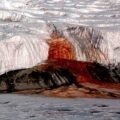
According to the study authors, finding the two sets of genes in ancient and modern soil layers “signaled that microbes resistant to antimicrobials can linger in permafrost for centuries.”
Fortunately, the team’s analysis found that most of the identified microbes, including potentially dangerous pathogens, don’t spread far from middens, even those undergoing defrosting. As a result, the team said that these ancient microbes “pose little risk to public health,” at least for the time being.
“Here we show that the risk of release of ancient pathogens from ancient middens in Greenland is currently low,” Dr. Aarestrup explained.
Instead, the researcher noted that Arctic middens appear to function like “long-term natural experiments,” in which both human- and animal-associated bacteria, including “opportunistic” species carrying resistance genes, remain detectable centuries later as a broader “legacy of human activity.”
The study “Microbial composition of archaeological middens: Tracing Human Footprints Through Centuries in Greenland’s Ancient Settlements” was published in Frontiers in Microbiology.
Christopher Plain is a Science Fiction and Fantasy novelist and Head Science Writer at The Debrief. Follow and connect with him on X, learn about his books at plainfiction.com, or email him directly at christopher@thedebrief.org.