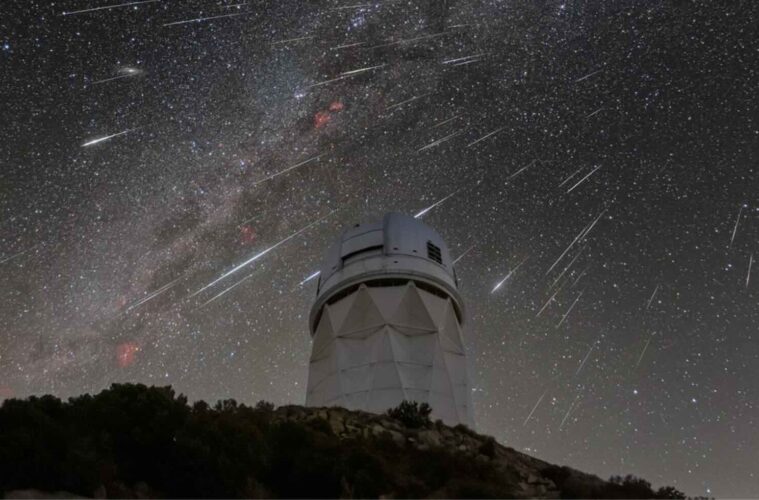
A near-Earth asteroid discovered by astronomers late last year that showed a rising potential for colliding with Earth has been downgraded, according to planetary defense experts.
Physicists at the University of Surrey have uncovered evidence suggesting that, at the quantum level, time does not have a single, forward direction but instead can emerge in two opposing directions.
New research suggests that Enceladus’ subsurface ocean may trap signs of life in deep layers for thousands of years, making it unlikely that NASA’s planned plume samples will provide clear evidence of extraterrestrial organisms.
Chemotaxis, a process for chemically inducing movement in an organism, may be a crucial tool in the search for extraterrestrial life, German researchers say.
Cosmic ghost towns, halted in their development by cosmic forces billions of years ago, have been discovered by University of Arizona Steward Observatory astronomers.
A distant supermassive black hole, the mysterious 1ES 1927+654, emits X-ray pulses unlike anything previously recorded, which MIT astronomers hypothesize results from a cosmic balancing act.
Toyota Motor Corporation, a name that has long been synonymous with cars, has announced new plans that could soon also make the company a recognized name in the growing commercial space industry.
After receiving healthy signals from the Parker Space Probe, NASA can breathe a sigh of relief following the craft's record-breaking approach to the Sun.