

In Israel’s Qafzeh cave, archaeologists have discovered an intriguing set of ancient human remains that reveal a story of illness, violence, death, and survival in the remote past.
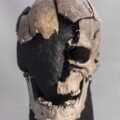
The international team of archaeologists from Centro Nacional de Investigación sobre la Evolución Humana (CENIEH) and Tel Aviv University revealed their analysis of ancient human fossil remains, known as Qafzeh 25, in a recent paper published in Scientific Reports.
The findings provide rare evidence of interpersonal violence, care for the injured, and early funerary practices in a human population that lived between 92,000 and 145,000 years ago.
Analyzing Ancient Human Remains
The researchers used a range of techniques to examine one particularly intriguing skull, including high-resolution micro-computed tomography (microCT) alongside macroscopic and microscopic analyses. Their investigation revealed a linear lesion across the mandible and lower premolars, with characteristics consistent with trauma inflicted by a sharp object.
Despite the severity of the injury, the researchers concluded that the individual survived the ordeal based on evidence of bone remodeling. The extent of healing suggests the person lived for a considerable period after suffering the wound.
Although the available evidence does not allow archaeologists to determine exactly how the injury occurred, they consider interpersonal violence the most likely explanation. The discovery is particularly significant because evidence of sharp-force trauma in Middle Paleolithic human remains is exceedingly rare.

Never-Before-Seen Conditions
Beyond the apparent head injury, the Qafzeh 25 skull yielded another remarkable discovery. Detailed examination of the teeth revealed dental conditions that had not previously been documented in humans of this antiquity.
The microCT scan revealed a hidden carious lesion in a lower premolar, along with enamel defects. These sorts of tooth decay issues are uncommon in early homo sapiens, as they are largely caused by bacteria that thrive on sugars. Before the advent of agriculture and later processed carbohydrates and refined sugars, such tooth decay was rare due to diets high in meats, nuts, and fibrous vegetables, which helped clean the teeth.
Ancient Human Funerary Practices
Looking beyond the skull, the researchers also examined the broader funerary context of the skeleton in an effort to reconstruct the burial practices of these ancient humans.
A broader analysis of the entire skeleton suggests it was deliberately buried, as it lacks evidence of carnivore predation or damage consistent with exposure to the elements. According to the researchers, this makes Qafzeh Cave one of the most important sites in the world for studying Homo sapiens’ earliest internment practices and the relationship not just between the living and the dead, but also between the living and the dying.
“These findings provide new evidence in the ongoing debate about the origins of complex behaviours such as interpersonal violence, the care of injured or ill individuals, and funerary practices—fundamental aspects for understanding the social and cultural evolution of our species,” said lead author Ana Pantoja Pérez, a member of the DEATHREVOL research group.
The find represents one of the earliest known well-preserved human populations outside of Africa at this time, residing in the Levant at least 90,000 years ago. With evidence of a healed traumatic injury, unusual dental disease, and intentional burial, the Qafzeh 25 skeleton offers a rare glimpse into the lives—and deaths—of some of our earliest ancestors.
The paper, “A Taphonomic Reassessment of Qafzeh 25 and Its Implications for Violence, Health and Funerary Practices,” appeared in Scientific Reports on June 30, 2026.
Ryan Whalen covers science and technology for The Debrief. He holds an MA in History and a Master of Library and Information Science with a certificate in Data Science. He can be contacted at ryan@thedebrief.org, and follow him on Twitter @mdntwvlf.