
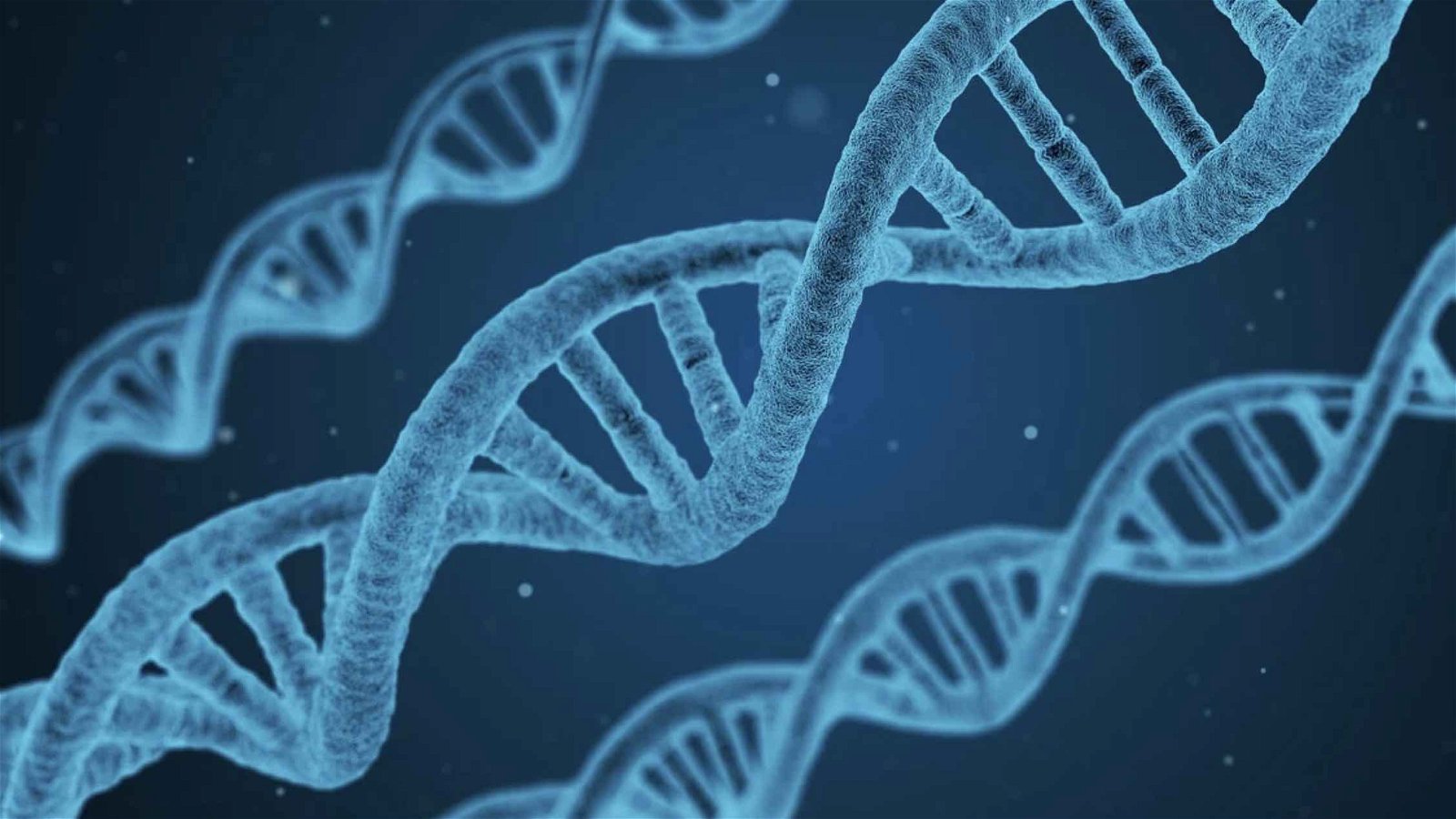
A new ultra-efficient DNA splicing method developed by a Japanese research team using silver nanoparticles offers a dramatic improvement to how scientists stitch genetic blueprints together, with implications for future developments in genetics.
In animal models for drug research, crop breeding, and disease treatment, scientists cut and recombine DNA segments, traditionally relying on “sticky ends,” the overhanging bits left at the ends of the sequences to create a stable join.
Now, researchers at Japan’s Nagoya University and Gifu University have announced a much more precise silver nanoparticle-based solution for DNA cutting and joining in a recent paper published in Nucleic Acids Research, enabling incredible precision.
DNA Splicing Challenges
The sticky ends required in traditional splicing techniques come with significant drawbacks. In these methods, restriction enzymes cut DNA, which is then reattached using T4 DNA ligase. Unfortunately, restriction enzymes lack precision, often producing sticky ends that are not long enough to create an optimal join.
Professor Hiroshi Abe and Assistant Professor Masahito Inagaki at Nagoya University, in collaboration with Professor Natsuhisa Oka at Gifu University, led the effort to improve the efficiency of DNA splicing. The team focused on cutting DNA segments using chemical reactions rather than the restriction enzymes typically employed, drawing inspiration from decades-old research.
Between 1990 and 1992, researchers reported successfully cutting 3′-thiol-modified DNA at specific locations using silver ions.
“Although it had been known for a long time, it was never put to practical use, and we recognized that it could be the key to our goal of creating sticky ends of any length and sequence at any position we choose,” Hiroshi told The Debrief.
Rethinking Old Work
However, this method was impractical because nonspecific binding of silver ions resulted in only a 14% recovery rate.’ The researchers’ breakthrough came from substituting silver nanoparticles for silver ions, aiming to improve DNA recovery by removing them via centrifugation after the reaction was over.
“The turning point was to turn this problem of ‘how to remove the silver’ to our advantage,” Hiroshi explained. “We reasoned that if the silver were in the form of nanoparticles, it could be removed easily by centrifugation after the reaction, greatly improving recovery.”
Another problem quickly arose, as cleaving efficiency required temperatures and durations that were hazardous to the DNA itself. At 70°C, the DNA achieved only 50% efficiency, whereas it took 2 hours at 95°C to reach something approaching 100% efficiency.
Polyethylene glycol (PEG), a water-soluble polymer, provided the solution the researchers required. Coating the silver nanoparticles with PEG increased efficiency at a mere 37°C for two hours, from 36% to 92%.
“In the end, we optimized the conditions to a practical level and, under ambient temperatures, achieved PEG-modified cleaving efficiency above 91% at 50°C within just one to two hours,” Inagaki said.
A Powerful DNA Editing Breakthrough
The new silver nanoparticle technique improves DNA assembly efficiency by two to five times. Crucially, their work is not theoretical: the team successfully introduced a DNA fragment into live cells, confirming expression of a green fluorescent protein gene.

“We have shown that two DNA fragments can be joined. Now, we need to confirm whether multiple fragments can be joined at the same time—a key step for building genome-scale DNA,” Ingaki said.
The researchers will continue to pursue this new splicing method, both to explore its potential for advanced applications and to consider bringing the technique into routine use.
“To make it a routine, everyday tool, the remaining tasks are to verify reproducibility across a wide range of sequences, to scale up to longer DNA, and to develop standardized, kit-format protocols that anyone can follow,” Hiroshi said. “We see these as engineering and optimization challenges rather than fundamental barriers, and we believe they can be overcome.”
“Our next goal is to extend this technique to longer DNA and, ultimately, to genome-scale DNA assembly,” Hiroshi concluded. “Specifically, we plan to apply it to the construction of mRNA libraries and the synthesis of long-chain DNA encoding therapeutic proteins, while also working on automation and standardization, so that it can grow into a foundational technology actually used in the fields of synthetic biology and nucleic acid medicine.”
The paper, “Silver Nanoparticle Induced Site-Specific Strand Cleavage of Chemically Modified Oligonucleotides for Long-Chain DNA Assembly,” appeared in Nucleic Acids Research on June 10, 2026.
Ryan Whalen covers science and technology for The Debrief. He holds an MA in History and a Master of Library and Information Science with a certificate in Data Science. He can be contacted at ryan@thedebrief.org, and follow him on Twitter @mdntwvlf.