

A binary star system about 150 light years from Earth and in close proximity in the Milky Way galaxy is on track to collide as a type 1a supernova, according to University of Warwick astronomers.
The resulting explosion will show in the night sky as 10 times more brilliant than the Moon, although not for another 23 billion years. Type 1a supernovae belong to the category of “standard candles,” objects used to measure their distance from Earth as astronomers map the universe.
Type 1a Supernova Detonations
Type 1a explosions result from the remnant core of a star, called a white dwarf, accreting so much mass that its own gravity causes it to explode. Theoretical astrophysics predicts binary white dwarfs produce the majority of type 1a supernova explosions. The expected mechanism for the explosions is one of the white dwarfs slowly siphoning its partner’s material until it or both stars explode.
Now, for the first time, the Warwick research team has announced the discovery of such a binary system.
“For years a local and massive double white dwarf binary has been anticipated, so when I first spotted this system with a very high total mass on our Galactic doorstep, I was immediately excited,” said lead author James Munday.
“This is a very significant discovery. Finding such a system on our galactic doorstep is an indication that they must be relatively common, otherwise we would have needed to look much further away, searching a larger volume of our galaxy, to encounter them,” added co-author Dr. Ingrid Pelisoli.
Observing the Binary Star System
“With an international team of astronomers, four based at The University of Warwick, we immediately chased this system on some of the biggest optical telescopes in the world to determine exactly how compact it is,” Munday explained.
The team relied on data from various observation platforms, including the Hubble Space Telescope. After discovering that the stars were so close together that their distance measured only 1/60th of that of the Earth and Sun, Munday identified the system as the first such binary, which will eventually develop into a type 1a supernova on a timescale similar to the age of the universe.
“At last, we as a community can now account for a few per cent of the rate of type 1a supernovae across the Milky Way with certainty,” Munday added.
Heavy Weight White Dwarfs
The stars are the heaviest systems of their type ever discovered, with a combined mass 1.56 times the Sun, dooming them to eventually explode. Fortunately, despite the dazzling display terrestrial residents might experience in 23 billion years, the supernova is no threat to the Earth.
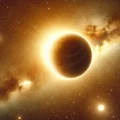
The system’s orbit is on a 14-hour cycle, but as their gravitational wave radiation continues to pull the pair together, their orbit will eventually reach 30 or 40 seconds. Astrophysicists predict the resulting calamity will be a rare and complex quadruple detonation when the bodies eventually collide. First, the white dwarf’s surface will explode, followed by its core, which will eject material toward its partner, repeating the two-tiered detonation. Such an event equals a thousand trillion trillion nuclear bombs and completely decimates the system.
“Finding this system is not the end of the story though, our survey searching for type 1a supernova progenitors is still ongoing and we expect more exciting discoveries in the future. Little by little, we are getting closer to solving the mystery of the origin of type 1a explosions,” Pelisoli concluded.
The paper “A Super-Chandrasekhar Mass Type 1a Supernova Progenitor at 49 pc Set to Detonate in 23 Gyr” appeared on April 4, 2025, in Nature Astronomy.
Ryan Whalen covers science and technology for The Debrief. He holds an MA in History and a Master of Library and Information Science with a certificate in Data Science. He can be contacted at ryan@thedebrief.org, and follow him on Twitter @mdntwvlf.