
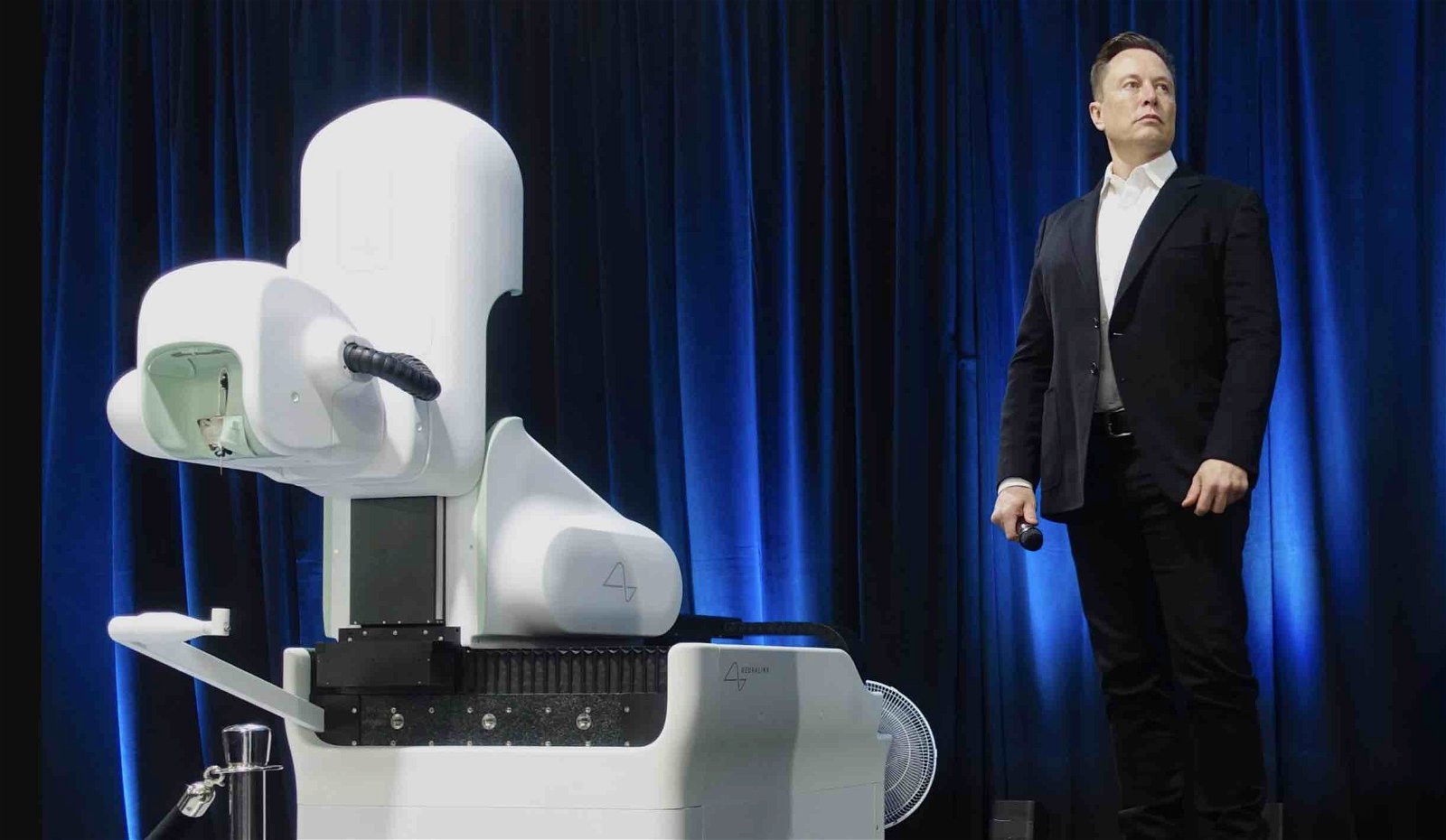
Elon Musk’s company Neuralink has announced plans to expand its brain-computer interface (BCI) chip, The Link, to “high-volume” production this year.
“Neuralink will start high-volume production of brain-computer interface devices and move to a streamlined, almost entirely automated surgical procedure in 2026,” Musk wrote in a December 31, 2025, posting on X. “Device threads will go through the dura without the need to remove it.”
“This is a big deal,” Musk’s post read.
The first Neuralink brain implant in a human was performed on Noland Arbaugh in late January 2024.
“I was not expecting it to be as good as it is,” Arbaugh said in an interview with The Debrief in 2025. “I think there were moments when I realized, like, ‘Oh, this is a much bigger deal than I thought it was.’”
“The Link” is the size of a quarter, about 23 mm in diameter and around 8 mm thick (pretty significant, compared to how big the human brain is), and reads electrical signals from neurons and translates them into digital commands. The ultimate goal is to allow users to control devices with their minds, restoring lost functionality through the device.
High Volume Potential
Apart from Musk’s references to “high volume” in his posting on social media, Neuralink has provided few details on exactly what level of production the company expects to attain this year.
“At this stage, we interpret ‘high-volume’ realistically as hundreds moving toward low thousands of implants per year,” Carolina Aguilar, CEO and co-founder of INBRAIN Neuroelectronics, one of Neuralink’s competitors, told The Debrief, although Aguilar added that his company expects that number to eventually reach “tens of thousands” on account of a range of factors.
“Scaling responsibly in neurotechnology is not just a manufacturing factor; it’s a clinical, surgical, and systems consideration,” Aguilar added. Along similar lines, Florian Solzbacher, co-founder and Member of the Board of Directors of Blackrock Neurotech, said the challenges presented with scaling “usually come in all areas.”
“It starts with capability, the processes, and the capacity to actually make that many devices,” Solzbacher said in an email to The Debrief, adding that that number—should it reach “tens of thousands, or hundreds of thousands of devices” would require “well-qualified, validated processes.”
Nonetheless, Solzbacher agrees that such devices are urgently needed worldwide for the millions who suffer from neurological disorders, paralysis, and other conditions that limit mobility and communication. But safety comes first.
When “The Link” Goes Offline
The Link has had its share of technical issues in the past. Roughly a month after the BCI implant, Arbaugh was having complications as the threads from the device detached, retracting from the neural tissue. Neuralink technicians were able to repair the device without removal, although Arbaugh still wonders what the long-term effects could potentially be.
“Maybe it is doing something terribly wrong to my brain,” Arbaugh joked, though he said he doubts this to be the case. “I haven’t felt anything bad. We’ve been doing checkups pretty regularly, and we haven’t seen any adverse effects. But it’s just one of those things, like, you don’t know until all the data comes out long term.”
Neuralink has also faced safety concerns raised by the Food and Drug Administration (FDA) in recent years. The company’s initial application to begin trials was rejected in 2022, but the company subsequently made adjustments to meet regulatory standards.
Implants on the Rise
As of September 2025, a total of 12 people worldwide with severe paralysis have received Neuralink implants. These patients range from a paralyzed man with amyotrophic lateral sclerosis (ALS) to quadriplegics with spinal cord injuries, all of whom now use brain-computer interfaces to communicate, type, and/or control digital tools using thought alone.
Currently, millions of people around the world suffer from various debilitating diseases that BCIs could help transform. In addition to providing these individuals another way they can contribute back to society on their terms, the technology fundamentally aids them in achieving a better quality of life. In this sense, Neuralink’s prospective “high-volume” production signals a major step toward broader worldwide accessibility of BCI technology.
While the company has focused primarily on medical applications for individuals with paralysis or neurological disorders, Musk has suggested that the technology could one day expand to consumer applications, potentially allowing anyone to control computers, phones, and other devices using only their thoughts.
Fast-growing BCI Companies like Synchron and INBRAIN Neuroelectronics are already collaborating with tech giants such as Apple and Microsoft on healthcare-related BCIs, but when does healthcare become the backdoor to larger consumer implications and mass consumerism?
Backdoor to Healthcare
With over 10,000 people reportedly on Neuralink’s waiting list to undergo implantation of The Link, it’s no surprise Elon Musk has said the company plans to ramp up production.

In the fall of 2025, Morgan Stanley issued a private report that argued Musk and Neuralink are at the forefront of a larger technological shift: one that society may not be ready for, with implications for healthcare, gaming, defense, investing, and the future of humanity.
Lawmakers are also aware of such issues, evidenced by Senate Majority Leader Chuck Schumer, with Senators John Cornyn and Ron Wyden, proposing legislation to regulate BCIs last September, requesting that the FTC closely examine the policy for long-term use under the MIND Act.
With little regulation in parallel to the advancement of BCI technology, many questions arise, including whether the FDA should allow “high volume” BCI production by a single company. “If something more serious happens, the FDA and other regulatory bodies can put their foot down and put you on hold,” Solzbacher told The Debrief. “A number of years ago, there were some issues with pacemaker leads, and the FDA just stopped the ability for a big device player to even sell any pacemakers.”
Additional questions remain over whether Neuralink should be required to make its findings openly accessible, which potentially paves the way toward similar advancements by competitors.
“Brain-computer interfaces raise profound medical, ethical, and societal questions, and progress in this field benefits from a diverse ecosystem rather than a single dominant approach. Different technologies, materials, clinical indications, and regulatory strategies need to be explored in parallel,” Aguilar said.
“A healthy BCI landscape should include multiple companies, academic groups, clinicians, and regulators contributing to standards around safety, data integrity, patient outcomes, and long-term responsibility,” she adds. “Broad participation helps ensure that innovation is balanced with transparency, oversight, and public trust as these technologies move closer to real-world impact.”
Chrissy Newton is a PR professional and the founder of VOCAB Communications. She currently appears on The Discovery Channel and Max and hosts the Rebelliously Curious podcast, which can be found on YouTube and on all audio podcast streaming platforms. Follow her on X: @ChrissyNewton, Instagram: @BeingChrissyNewton, and chrissynewton.com. To contact Chrissy with a story, please email chrissy @ thedebrief.org.