

Solar magnetic field images captured by NASA’s Parker Solar Probe last year are providing crucial new insights into space weather, its relationship to the Sun’s atmosphere, and how it may pose a threat to Earth’s infrastructure.
The Parker Solar Probe made the closest approach to the Sun of any artificial instrument ever created, passing through the corona itself in December of 2024 to capture the imagery. Analysis of those pictures illuminating the solar magnetic field’s effects on space weather was revealed in a new paper recently published in the Astrophysical Journal Letters.
Dangerous Space Weather
Modern society depends on ground-based power and telecommunications systems to keep the world we’re connected to humming. Unfortunately, these systems are prone to fluctuations in solar activity. As our technological infrastructure expands into space, it increasingly relies on GPS and communications satellites beyond Earth’s atmosphere, which are even more vulnerable to disruptive space weather.
Behind this chaotic space weather are events known as coronal mass ejections (CMEs). These CMEs push high-energy particles and magnetized material through the corona and into outer space. As they travel across the solar system toward Earth, they drive solar wind and can eventually impact technological systems, disrupting electronics. And these aren’t just Earthly problems: future crewed missions to Mars, reliant on life support systems, will be at the mercy of these same solar forces.
New Parker Solar Probe Findings
The most intriguing discovery from the new data is that not all of the material involved in CMEs is spewed into space, creating inflows that earlier observations by missions such as SOHO and STEREO had only hinted at. Some of the material instead returns to the Sun, resulting in subtle atmospheric changes that affect subsequent CMEs. This finding changes how scientists understand CMEs. Rather than being purely outgoing bursts that affect planets throughout the solar system, CMEs can reverse course and influence the very Sun from which they originated.
“These breathtaking images are some of the closest ever taken to the Sun, and they’re expanding what we know about our closest star,” commented Joe Westlake, heliophysics division director at NASA Headquarters in Washington, in a press release. “The insights we gain from these images are an important part of understanding and predicting how space weather moves through the solar system, especially for mission planning that ensures the safety of our Artemis astronauts traveling beyond the protective shield of our atmosphere.”
“We’ve previously seen hints that material can fall back into the Sun this way, but to see it with this clarity is amazing,” said co-author Nour Raouafi, the project scientist for Parker Solar Probe at the Johns Hopkins Applied Physics Laboratory, which designed, built, and operates the spacecraft in Laurel, Maryland. “This is a really fascinating, eye-opening glimpse into how the Sun continuously recycles its coronal magnetic fields and material.”
Measuring Solar Inflows
The high-resolution close-up images captured by the Parker Solar Probe enabled researchers to obtain the first measurements of CME inflows. With the first precise measurements of inflow speed and size, the team calculated their physical impact on the solar atmosphere.
Close observations have changed how scientists understand the relation between CMEs and solar magnetic field lines. CMEs were known to be produced by twisted magnetic field lines snapping and rearranging. How those loops behave after being stretched to their breaking point by CMEs can differ more than expected, including drifting into space, falling back into the Sun, or simply mending in place. Those that fall into the Sun unexpectedly carry solar material with them, altering magnetic fields and changing the trajectories of future CMEs.
“It turns out, some of the magnetic field released with the CME does not escape as we would expect,” said lead author Angelos Vourlidas, WISPR project scientist and researcher at Johns Hopkins Applied Physics Laboratory. “It actually lingers for a while and eventually returns to the Sun to be recycled, reshaping the solar atmosphere in subtle ways.”
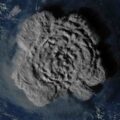
The new study significantly advances scientific understanding of space weather by revealing, for the first time, the precise mechanisms of inflows. Eventually, this latest research should improve space weather predictions.
“Eventually, with more and more passes by the Sun, Parker Solar Probe will help us be able to continue building the big picture of the Sun’s magnetic fields and how they can affect us,” Raouafi concluded. “And as the Sun transitions from solar maximum toward minimum, the scenes we’ll witness may be even more dramatic.”
The paper, “High-resolution Imaging of the Magnetic Reconfiguration of the Corona from inside the Corona by WISPR on Parker Solar Probe,” appeared in The Astrophysical Journal Letters on December 18, 2025.
Ryan Whalen covers science and technology for The Debrief. He holds an MA in History and a Master of Library and Information Science with a certificate in Data Science. He can be contacted at ryan@thedebrief.org, and follow him on Twitter @mdntwvlf.