A team at Kobe University has discovered a previously overlooked dynamic between the Japanese red elder plant and a group of beetles that both harm and help the plant.
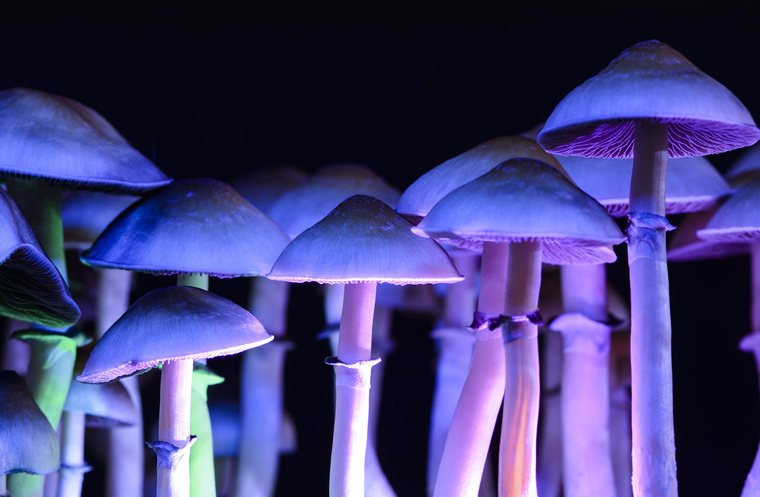
An international team of researchers from Africa and the United States identified a newly described species of psychedelic mushroom that is the closest known wild relative of P. cubensis.
A recent study from the University of Cologne has revealed that microscopic soil worms called nematodes form surprisingly diverse communities throughout the Atacama.
For many years, researchers have questioned whether the psychedelic compound N,N-dimethyltryptamine (DMT) is produced naturally in the brain and if it might act as a signaling substance similar to serotonin.
A team of researchers led by Ocean Networks Canada conducted an experiment to lure a species of deep-sea worms to colonize remains placed on the seafloor.
A recent study published in PNAS Nexus reports that a swarm of small earthquakes beneath Yellowstone National Park set off a burst of biological activity deep underground.
Move over meat, scientists have engineered a fungal organism that produces protein more efficiently than conventional livestock while dramatically reducing environmental damage.
Tales of sea serpents have haunted seafarers for centuries, and Scottish researcher Adrian Shine offers a naturalist's view on some of history's most famous cases.
Scientists have long been intrigued by the ability of flatworms to regenerate complete bodies from small fragments of tissue. The underlying mechanisms behind this process have remained relatively unclear until recently.