
Researchers at the Max Planck Institute for Extraterrestrial Physics (MPE) have detected a ring-shaped molecule with 13 atoms, including sulfur, in deep space for the first time.
The team behind the discovery of 2,5-cyclohexadiene-1-thione (C₆H₆S) said finding such a complex molecule in interstellar space “closes a critical gap” between previous detections of simpler molecules and the complex building blocks of organic life, which have been discovered in comets and meteorites.
They also suggest the discovery represents a “major step forward” toward explaining the origin of life on Earth and the potential for extraterrestrial life beyond Earth.
“This is the first unambiguous detection of a complex, ring-shaped sulfur-containing molecule in interstellar space—and a crucial step toward understanding the chemical link between space and the building blocks of life,” explained Mitsunori Araki, scientist at MPE and lead author of the study detailing the discovery.
While scientists have yet to find definitive evidence of extraterrestrial life, astronomers have previously detected organic compounds in deep space. Often described by researchers as the “building blocks of life,” the discovery of these organic compounds has hinted that life’s ingredients were carried to Earth aboard comets and meteors.
Still, the organic molecules observed in earlier studies were simpler, with only a handful of atoms. When these observations detect sulfur-containing compounds in interstellar space, they typically involve six or fewer molecules. Because sulfur is a key life ingredient, the lack of complex molecules in space left a gap in knowledge about the chemistry of life on Earth and how those molecules may affect the possibility of extraterrestrial life.
“Large, complex sulfur-containing molecules were expected, particularly due to sulfur’s essential role in proteins and enzymes, yet these larger molecules had remained elusive,” the MPE researchers explained. “This gap between interstellar chemistry and the organic inventory found in comets and meteorites had been a central mystery in astrochemistry.”
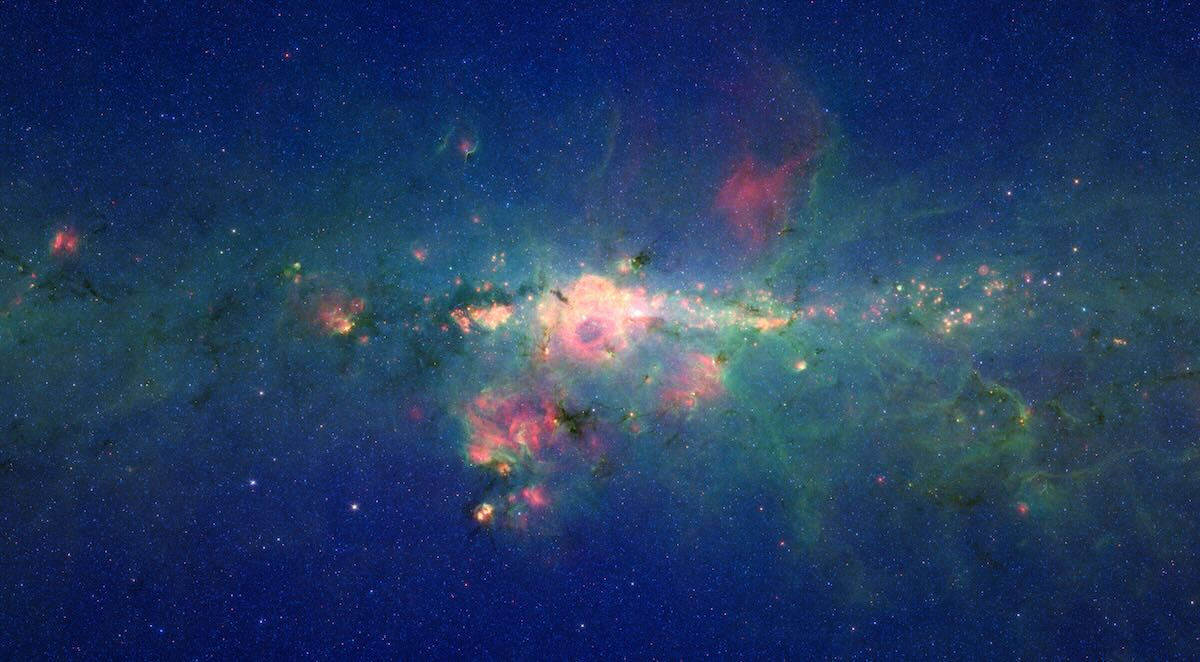
According to the press release announcing the discovery, the MPE team spotted it in the molecular cloud G+0.693–0.027. This location places the molecule near the center of the Milky Way, about 27,000 light-years from Earth.
After comparing the chemical structure of the detected molecule with known values, the team determined it was a stable six-membered ring and a total of 13 atoms. Further analysis revealed that the newly discovered C₆H₆S is “structurally related” to molecules previously identified in an extraterrestrial sample.
To add veracity to the discovery, the MPE researchers synthesized the molecule in the lab. According to the release, this process involved the application of a 1,000-volt electrical discharge to the “evil-smelling liquid thiophenol” (C₆H₅SH).

Next, the team analyzed the resulting C₆H₆S sample with a spectrometer and detected a “radio fingerprint” with more than 7 significant digits. When they compared this fingerprint with data collected by the Yebes 40m and IRAM 30m radio telescopes in Spain, they found a chemical similarity, suggesting the new sulfur-containing molecule discovery could be a missing link in origin-of-life and extraterrestrial life studies.
When discussing the potential implications of their discovery, the MPE team said their findings suggest more complex sulfur-bearing molecules are still out there waiting to be found. They also believe their finding supports the idea that the fundamental ingredients of life may have formed in interstellar space “long before Earth came into existence.”
“Our results show that a 13-atom molecule structurally similar to those in comets already exists in a young, starless molecular cloud,” explained Valerio Lattanzi, a scientist at MPE. “This proves that the chemical groundwork for life begins long before stars form,”
Christopher Plain is a Science Fiction and Fantasy novelist and Head Science Writer at The Debrief. Follow and connect with him on X, learn about his books at plainfiction.com, or email him directly at christopher@thedebrief.org.