
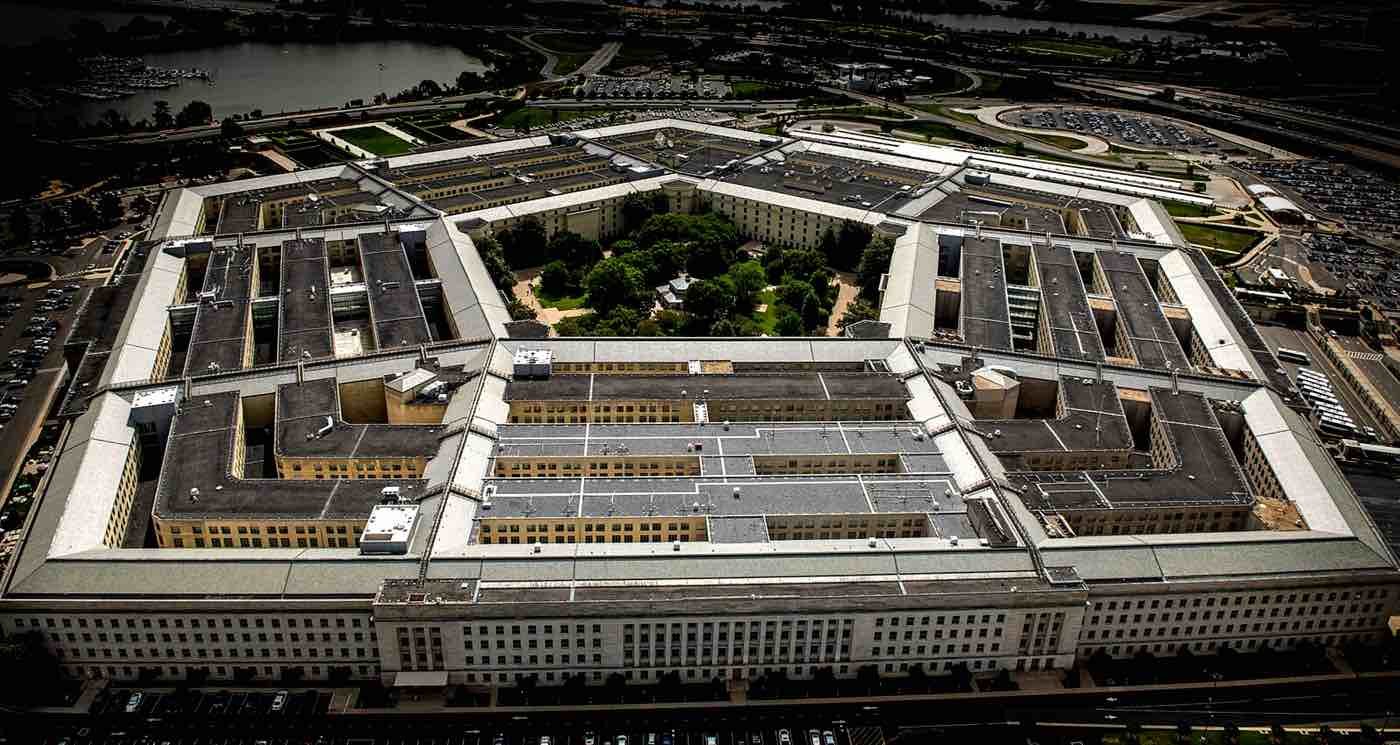
Welcome to this edition of The Intelligence Brief… This week, it was revealed that the Pentagon is considering new, controversial restrictions that would require thousands of employees to sign nondisclosure agreements and undergo random polygraph tests, as part of Defense Secretary Pete Hegseth’s intensifying crackdown on leaks. In our analysis, we’ll be examining 1) how the proposed measures would impact more than 5,000 military, civilian, and contract personnel, 2) why critics argue the policies are designed to intimidate workers and silence dissent rather than counter espionage, 3) how the effort fits into a broader pattern of curtailing press access and internal accountability at the Pentagon, and 4) what these changes could mean for transparency and oversight at one of the nation’s most powerful institutions.
Quote of the Week
“The protection of sensitive information is paramount to our national security, the safety of our warfighters, and the preservation of critical decision space for our senior leaders.”
– Deputy Defense Secretary Steve Feinberg
RECENT NEWS from The Debrief
- An “extremely puzzling” discovery is challenging our ideas about the interstellar object 3I/ATLAS.
- Digital reconstructions of a million-year-old skull uncovered in China could potentially rewrite the origin story of early humans.
- AlterEgo, a new MIT-affiliated startup, is unveiling a device that reportedly allows users to communicate silently at the speed of thought.
- Get all the latest stories from The Debrief, with more breaking stories at the end of this week’s newsletter.
Pentagon to Implement NDAs and Polygraphs in Crackdown on Leaks
Sweeping new restrictions are currently being considered for thousands of Pentagon employees, according to recent memos that outline new, enhanced efforts to reduce leaks within the Defense Department.
The effort has emerged amid other recent changes at the Pentagon, which include the recognition of “Department of War” as an official secondary title, although no formal act of Congress has been initiated for this—a requirement for any formal, permanent change of the Department’s name.
Based on draft documents obtained and first reported by The Washington Post, the Defense Department’s new policies would affect nearly 5,000 employees across the Office of the Secretary of Defense and the Joint Staff.
If the measures are enacted, they would impose new requirements on military service members, civilian staff, and contractors to sign nondisclosure agreements that prohibit the release of any DoD information deemed to be inappropriate for public dissemination. The measures would also include random polygraph tests for Pentagon employees.
New Security Measures Muffle DoD Employees
The proposals mark the latest escalation in broader efforts by the Trump administration to root out disloyalty, while silencing what it perceives as unauthorized contact with the media.
Drafted by Deputy Defense Secretary Steve Feinberg, the recent memos outline a sweeping nondisclosure agreement that mirrors previous language implemented to restrict Pentagon press access.
Based on the memos, disciplinary action may be taken for personnel who are non-compliant.
Random Lie-Detector Tests
Additionally, the memos propose “random polygraph” programs that would implement similar strategies with Pentagon staff to those implemented with the intelligence community, which some critics have argued are more in line with intimidation than national security objectives, partially because there are already laws in place that impose punishments for the unauthorized disclosure of classified or sensitive information.
In the past, the Pentagon has experimented with polygraph screenings to reduce leaks, although complaints by some political appointees earlier this year temporarily paused the practice. The new directives drafted by Feinberg would make such random testing routine for those with access to classified information.
Tighter Controls Overall
Currently, the Pentagon has already restricted public access under Defense Secretary Hegseth in several ways, including limiting the number of official press briefings and removing reporters from their desks within the building. Media travel with DoD senior officials has also been paused, along with new additional requirements for press credentials that require journalists to agree not to solicit information without official approval, even when that information is unclassified.
Amid the new limitations, the Pentagon has also reduced its involvement in public outreach, which includes think tank events and public forums, partially due to concerns expressed over lending the Pentagon’s “name and credibility” to organizations or groups that it identifies as having priorities misaligned with those of the administration.
The net result, it appears, is a Defense Department that is becoming increasingly insulated from oversight and public scrutiny, amid circumstances where heightened political pressures predominate in America’s heated political climate.

That concludes this week’s installment of The Intelligence Brief. You can read past editions of our newsletter at our website, or if you found this installment online, don’t forget to subscribe and get future email editions from us here. Also, if you have a tip or other information you’d like to send along directly to me, you can email me at micah [@] thedebrief [dot] org, or reach me on X: @MicahHanks.

Here are the top stories we’re covering right now…
- French Navy Seizes Russian “Shadow-Fleet” Vessel Suspected of Launching Mystery Drones Into NATO Airspace
French raid on suspected Russian “shadow fleet” tanker deepens NATO drone mystery, revealing possible hybrid warfare tactics by Moscow.
- “We’re Able to See It from Space”: New Clues Point to a Vast Ocean on Ancient Mars
A recent study suggests that Mars displays clear geological signs indicating that ancient rivers once emptied into a massive body of water in its northern hemisphere.
- ESA’s Cassini Spacecraft Makes a Discovery in Enceladus Ice Jets That “Enhances the Likelihood that the Moon is Habitable”
Pushing nearer to finding extraterrestrial life, the Cassini space probe observed new organic molecules coming from Enceladus’s ocean.
- Newest 3I/ATLAS Study Reveals an “Extremely Puzzling” Discovery: Why Does It Have So Much Metal?
New questions emerge as an “extremely puzzling” discovery challenges our current ideas about the interstellar object 3I/ATLAS.
- “These Large Engravings Are Not Just Rock Art”: Mysterious 12,000-Year-Old Pictographs Uncovered in the Arabian Desert
An international team of archaeologists has discovered several mysterious, 12,000-year-old rock art “road signs” in the Arabian desert.
- Astronomers Have Detected a Vast Wave Disturbing the Structure of the Milky Way Galaxy
The source of the Milky Way’s strange wobble has finally been revealed, thanks to new data from the ESA’s Gaia Space Telescope.
- Sam Altman Announces Sora 2, a “ChatGPT for Creativity”
Sam Altman unveils Sora 2, a ‘ChatGPT for Creativity,’ making it fast and easy to turn ideas into videos, art, and other creative projects.
- Million-Year-Old Skull Unearthed in China Challenges Timeline of Human Origins
Digital reconstructions of a million-year-old skull uncovered in China could potentially rewrite the origin story of early humans.
- MIT-Linked Startup Unveils ‘Near-Telepathic’ Wearable Device for Silent Communication
AlterEgo, a new MIT-affiliated startup, is unveiling a device that reportedly allows users to communicate silently at the speed of thought.
- 5000-Year-Old Spanish Tomb Discovery Reveals the Surprisingly Connected World of Ancient Southwestern Europe
A 5,000-year-old Spanish tomb is offering researchers new insights into the lives of ancient people through the study of their death rituals.
- A Mysterious Spectral Reading on Mars Leads Researchers to an Undiscovered Mineral that May Hint at Ancient Life
Mysterious spectral data from Mars reveals a previously unknown mineral, indicating a dynamic past capable of supporting life.
- “We’re Going to See An Astronaut Death”: Government Report Issues Dire Warning Over Trump’s Budget Cuts to NASA
The White House wants to slash NASA’s budget. Space agency whistleblowers say that poses major safety risks, and could potentially endanger astronauts.
- Mystery Drone Incursions, a 3,000-Year-Old ‘Accident’, and Concerns Over Conflict with AI
This week, unidentified drones disrupting airports and military sites across Europe have sparked fresh fears of “hybrid warfare,” and much more.