

2025 has been a remarkable year for astronomical discoveries, with the launch of exciting new science missions that are fueling our expanding knowledge of the cosmos and will continue to propel scientific innovation for decades to come.
With a year of groundbreaking discoveries now behind us, here is a look at just a few of the biggest developments in astronomy that The Debrief has been tracking in 2025.
The Vera C. Rubin Observatory
The long-anticipated Vera C. Rubin Observatory is poised to fundamentally change how humanity observes the dynamic universe. Equipped with the world’s largest digital camera, the observatory will soon begin the Legacy Survey of Space and Time (LSST), a decade-long project that will repeatedly image the entire southern sky, capturing everything from exploding stars and near-Earth asteroids to subtle changes in distant galaxies.

Earlier this year, the public got a first look at just how powerful Rubin’s contributions to astronomy will be in the years to come. Beyond its technical achievements, Rubin represents a shift toward time-domain astronomy at an unprecedented scale. Rather than static snapshots of the cosmos, astronomers will receive a continuous, living record of how the universe evolves—opening the door to discoveries no one has yet imagined.
JWST Discoveries Are Pushing the Boundaries on Our Understanding of the Cosmos
Since entering full science operations, the James Webb Space Telescope has continued to redefine what astronomers thought was possible. Webb’s observations have revealed surprisingly mature galaxies in the early universe, detailed atmospheric chemistry on distant exoplanets, and new insights into star formation hidden within dense cosmic dust.
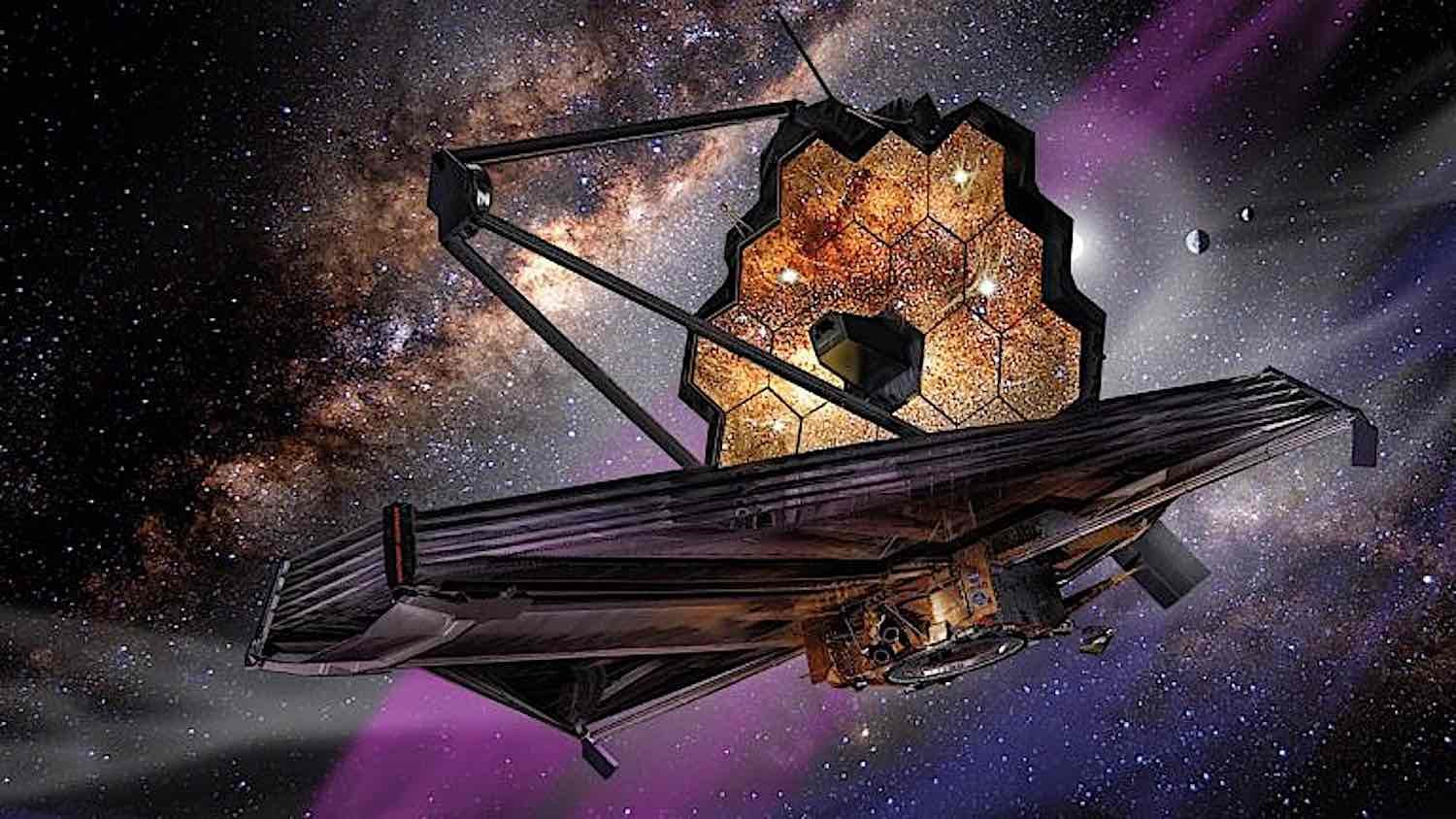
From Milky-Way-like galaxies that technically shouldn’t exist, to planetary curiosities that include an “impossible” atmosphere surrounding a magma-covered world, JWST’s findings have forced scientists to revisit long-standing assumptions about how lingering questions about our universe, including fundamental ideas about how galaxies formed after the Big Bang, and how complex planetary systems can become.
Rather than neatly confirming existing models, Webb has repeatedly challenged them, and if 2025 has been any indication, the years ahead will only continue to further expand our knowledge of the cosmos through the powerful eye of NASA’s premier space observatory.
Planetary Discoveries Are Inching Closer to Finding Earth-like Planets
Exoplanet science continued its steady march toward one of astronomy’s most profound goals: identifying worlds that resemble Earth. Observations combining Webb data with ground-based telescopes have refined measurements of planetary atmospheres, surface temperatures, and potential habitability across dozens of star systems.
While no true Earth twin has yet been confirmed, astronomers are now narrowing the search to rocky planets orbiting within their stars’ habitable zones, and this year brought us the discovery of a rare “Super Earth” in its star’s habitable zone, all within just 20 light years of Earth.

Each incremental discovery in this exciting area of astronomy brings researchers closer to answering whether Earth-like conditions—and possibly life—could indeed be more common in our galaxy than we currently expect.

Hubble Tension Controversy Continues
One of modern cosmology’s most persistent puzzles, known as the “Hubble tension,” remained unresolved this year. Measurements of the universe’s expansion rate derived from early-universe observations continue to conflict with values obtained from nearby galaxies, raising the possibility that something fundamental may be missing from current cosmological models.
Despite increasingly precise data from the Hubble Space Telescope and other observatories, the discrepancy has only grown sharper this year. Whether the solution lies in unknown physics, hidden systematic errors, or a deeper revision of cosmology itself remains one of the most closely watched questions in astrophysics.
The Discovery of 3I/ATLAS
Finally, no serious roundup of astronomy stories from 2025 would be complete without mentioning the enigmatic interstellar visitor 3I/ATLAS. Discovered in July of this year, astronomers confirmed the comet, which is only the third known interstellar object ever observed passing through our solar system.

Like its predecessors, 1I/‘Oumuamua and 2I/Borisov, the comet originated beyond our stellar neighborhood, offering a rare opportunity to study material formed around another star. Although public speculation quickly followed, scientists emphasized that 3I/ATLAS is a natural comet composed of ice, dust, and rock. Its brief passage provided invaluable data about the chemistry and behavior of interstellar objects—glimpses of the raw building blocks that may be common throughout the Milky Way.
Micah Hanks is the Editor-in-Chief and Co-Founder of The Debrief. A longtime reporter on science, defense, and technology with a focus on space and astronomy, he can be reached at micah@thedebrief.org. Follow him on X @MicahHanks, and at micahhanks.com.