In a breakthrough discovery, astronomers report the detection of the largest pair of black hole jets ever observed, which span an incredible distance of 23 million light years.
New mathematics could provide researchers with a framework for a "unified theory" that will allow new methods of resolving several of the universe’s mysteries.
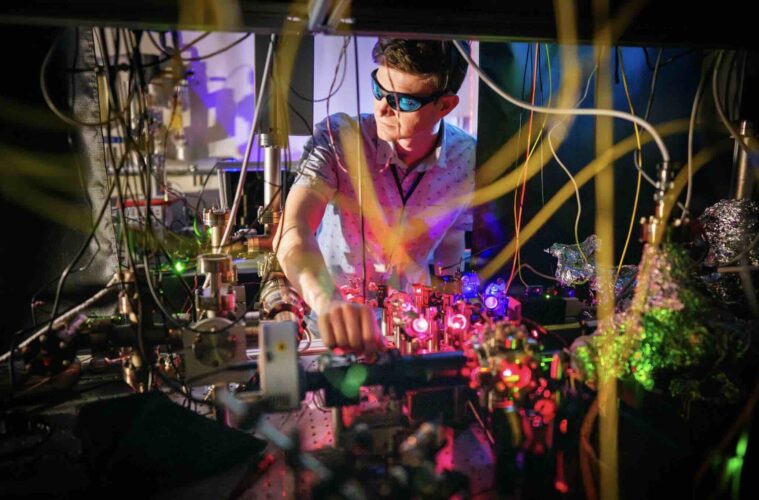
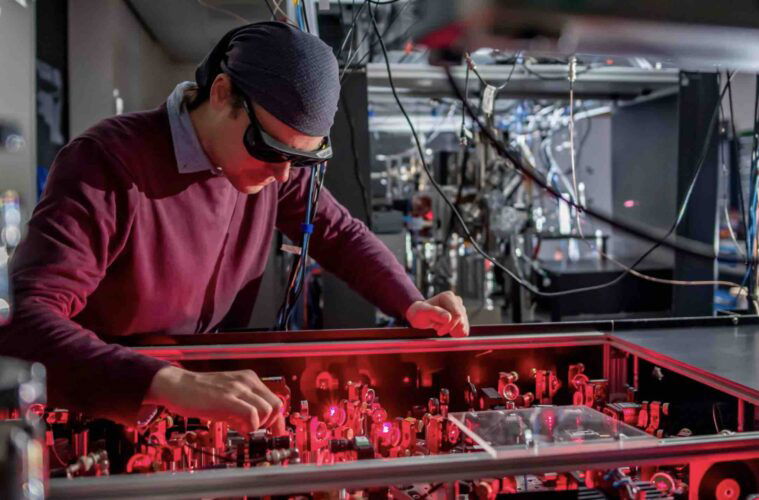
New laser research by the Defense Advanced Research Projects Agency (DARPA) is paving the way toward developing the most accurate atomic clock ever constructed.
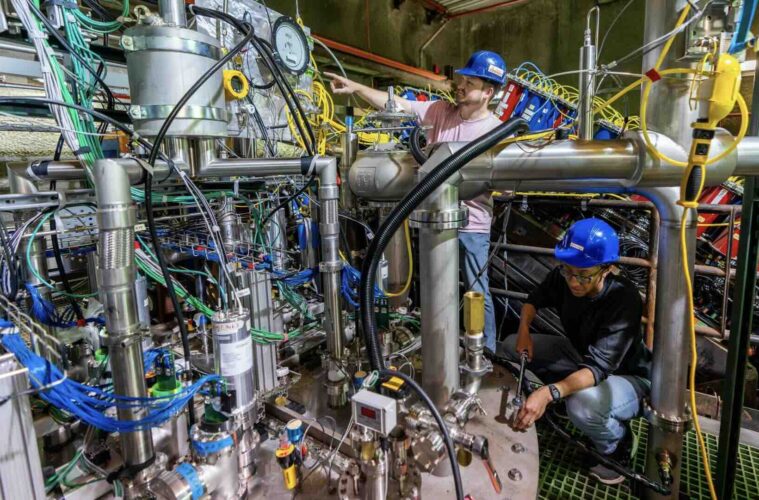
Scientists with the Deep Underground Neutrino Experiment (DUNE) have successfully detected the first neutrinos using a novel prototype particle detector.
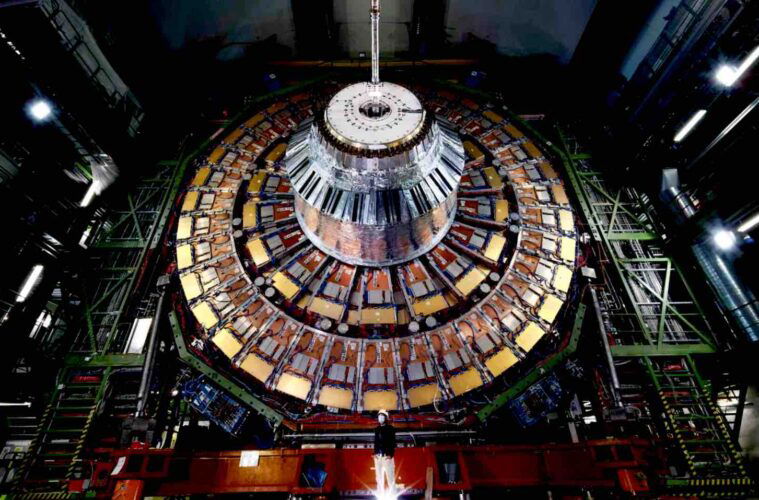
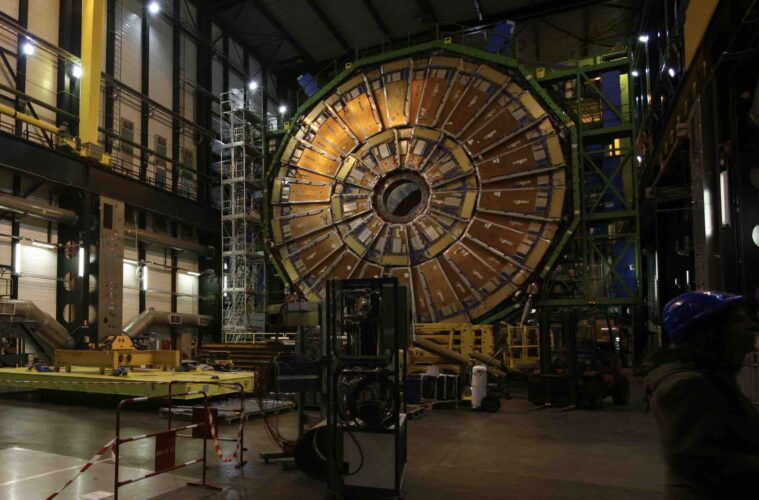
High-energy neutrino interactions have been observed within a particle collider for the first time, according to findings detailed in a new study that marks an important new milestone in particle physics.
Tractor beams, a technology once relegated to science fiction, could soon become a practical reality with the help of recent advancements in metasurface research.
Scientists have proposed a novel method of potentially detecting dark matter: by using a 3D-printed vacuum system to “trap” it with ultra-cold lithium atoms.
New insights into function of the famous Antikythera mechanism have been made with help from technology developed for the study of gravitational waves.
In a fusion energy milestone, researchers have revealed new ways of improving reactor efficiency and longevity while reducing the potential for damage.
New research suggests that black hole mergers may produce smaller black hole “morsels” that could help astronomers detect Hawking radiation using current telescopes.