Recent research from the University of Michigan now provides a geological explanation for why this part of the Nile became the foundation for Kushite civilization.
Deep in human evolutionary history, before anything recognizable as a vertebrate existed, one of our oldest relatives had a single eye sitting on top of its head.
Historians have observed that some letters in the Armenian, Georgian, and Caucasian Albanian alphabets closely resemble characters in Ethiopic, the ancient script of the Horn of Africa.
An interdisciplinary study recently published in Nature Communications provides a clearer picture of life in Central Europe between 1300 and 800 BCE, during the Urnfield culture.
For over a decade, the Roman-era skeleton known as the Beachy Head Woman has fueled discussions about the identity of the remains as well as migration in ancient Britain.
A new study in Nature led by scientists at New York University reports that fossil bones as old as 3 million years still contain thousands of preserved metabolic molecules.
Here’s a look at some of our favorite archaeological discoveries from 2025, and some of the greatest new insights we’ve obtained about the ancient world throughout the year.
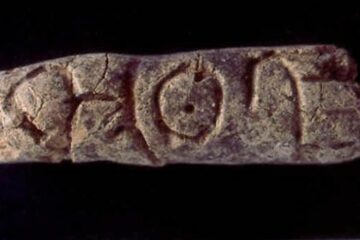
A research team at Johns Hopkins University has discovered evidence of the world's oldest alphabetic writing, carved onto finger-length clay cylinders, outdating other scripts by 500 years.