

Scientists say they are one step closer to reviving the long-extinct dodo, thanks to new advancements in artificial intelligence, genetic engineering, and other technologies.
The work, undertaken by researchers with Texas-based Colossal Biosciences, is leveraging genetic engineering and advanced reproductive technologies that could soon help to recreate the distinctive characteristics of the famous flightless bird and other “lost” species.
At the heart of the advancements is GenoMorph, a new AI platform designed to identify the specific genetic changes that researchers at Colossal believe to be responsible for the unusual anatomy of the dodo.
Along with its AI advancements, the company also says its recent efforts to reconstruct the extinct bird’s genome have yielded promising results, which include cultivating reproductive cells from one of its closest living relatives, and new techniques Colossal is developing that will help researchers edit the genomes of bird embryos in the coming years.
The company’s findings were recently detailed in a research study that appeared on the preprint server arXiv, marking a new milestone in Colossal’s ambitious—and at times controversial—efforts to leverage what the company calls “deextinction” technology to revive species like the dodo, the last known example of which vanished from its native Mauritius in the 17th century following human settlement.

Reconstructing the Dodo with Help from AI
Among the most significant challenges the research team faces in reviving extinct species is determining which genetic differences were the main drivers behind their physical appearance and other distinctive characteristics.
“The biggest scientific challenge is translating the dodo genome into the traits that made a dodo look like a dodo,” said Anna Keyte, Species Director of Colossal’s Avian team, in an email to The Debrief. “We can identify genetic differences between dodos and living pigeons, but we still need to determine which changes shaped features such as body size and beak shape, and how those changes work together during development.”
“In parallel, we need to show that edited Nicobar pigeon germ cells can produce healthy offspring through our surrogate system,” Keyte added. “Those are the two pieces that have to come together: understanding the traits and reliably producing birds that carry the relevant edits.”
Although dodo DNA has been successfully recovered, presently available genomic information is still limited, making it very difficult for researchers to identify the specific genetic mechanisms responsible for features like the bird’s prominent, curved beak, as well as the shape of its skull, which is distinctive among other avian species.
Now, with Colossal’s new GenoMorph platform, the company plans to overcome such issues through an approach that combines comparative genomics, developmental biology, and 3D measurements of the extinct bird’s anatomical features.
Borrowing from Cousins of an Extinct Avian Species
A key element of the new research involved the assembly of a dataset comprising genetic information spanning hundreds of samples. With information collected from chickens, ducks, pigeons, quail, and other birds, the genetic regulatory activity of these extant species was compared against available genomic data and physical measurements from more than 70 bird species.
The results of the analysis were striking: more than 650 candidate regulatory DNA elements were identified in association with beak size alone, while an impressive 1,698 related to beak thickness and breadth were revealed.
Unlike protein-coding genes, regulatory DNA is beneficial in helping reveal when, where, and also how strongly certain genes are activated during an organism’s development.
“The dodo’s defining anatomy emerged from networks of regulatory instructions that are difficult to interpret from ancient DNA alone,” said Colossal Chief Science Officer Beth Shapiro in a statement. According to Shapiro, the company’s study of how skulls and beaks develop in living birds is allowing researchers to identify genetic changes that could have shaped the dodo’s appearance.
Still, the regulatory elements identified in the recent research are presently still just candidates, rather than confirmed causes of specific traits, and additional research will be required to experimentally test the effects of these elements before they can be useful in future genome-editing efforts.
Reassembling Ancient DNA
In 2025, Colossal attained international attention after it revealed a pair of genetically-engineered hybrid wolves based on the successful reconstruction of the complete genome of the dire wolf, an extinct American megafaunal canine, using DNA from ancient samples.
The breakthrough marked a significant advancement for deextinction science, although some experts noted that the wolf pups were effectively modern wolves that resemble their extinct forbears thanks to genetic engineering, rather than being truly resurrected dire wolves.
Since the company’s launch, its focus has been the deextinction of some of the ancient world’s most captivating species, which include the woolly mammoth, the dodo, and Australia’s extinct marsupial known as the thylacine.
With its recent efforts to reconstruct the dodo genome, the company relied on a new computation technique that was originally developed for the company’s dire wolf project announced last April.
Ancient DNA is usually only preserved in damaged fragments, which causes significant gaps when scientists attempt to reconstruct the genomes of extinct species. To help overcome this, the company’s innovative assembly technique employs repetitive updates to a reference genome based on recovered ancient DNA, which helps uncover additional fragmentary genetic information to be uncovered during successive analyses.
Now, the company says its enhanced dodo genome assembly incorporates at least fivefold coverage, spanning close to 95 percent of its bases with an overall coverage averaging 65-fold—a level of improvement that could signal promise in the identification of specific genetic differences between the dodo and its closest living relative, the Nicobar pigeon.
Biological Tools for De-Extinction
Colossal says it has also significantly expanded its Nicobar pigeon colony to three dozen birds, along with the successful cultivation of reproductive precursor cells that may eventually carry heritable genetic modifications.
Next, the company says it expects future breakthroughs that will likely include the development of “chimeric” chickens based on embryonic stem cells, and a new technique for delivering CRISPR gene-editing tools into bird embryos.
Overall, this work is anticipated to allow researchers to test genetic changes affecting a range of physical traits, in an ongoing series of advancements that will aid scientists in recreating some of the most distinctive characteristics observed in living birds.
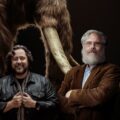
“We are in the final stages of our analysis of the dodo genome, with much more to come after the genome paper goes through peer review,” Shapiro said in a statement.
Still, while there are significant challenges that remain, the research team at Colossal says it believes its new technologies may have broader applications in developmental biology and conservation research as science advances toward the company’s core deextinction goals.
For researchers like Shapiro, making discoveries along the way toward reaching that goal is all part of the process.
“In the meantime, it’s been rewarding to see that an approach developed for the dire wolf is now producing value across another species program,” Shapiro said.
“That repeatability is central to Colossal’s model: every scientific breakthrough becomes part of a scalable technology platform that can accelerate the programs that follow.”
Micah Hanks is the Editor-in-Chief and Co-Founder of The Debrief. A longtime reporter on science, defense, and technology with a focus on space and astronomy, he can be reached at micah@thedebrief.org. Follow him on X @MicahHanks, and at micahhanks.com.