This week on 'The Debrief Weekly Report', we look at NASA and the Italian space agency's mission to monitor pollution, and how scientists around the world want to update the space treaty to include space junk.
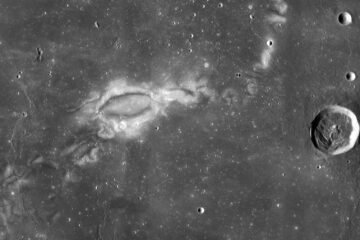
The “Dark Ages of the Universe” will be the focus of a new experiment conducted jointly by NASA and the U.S. Department of Energy (DOE), involving the placement of a new science observatory on the far side of the Moon.
NASA has announced that its Geotail spacecraft, a joint project with the Japanese Aerospace Exploration Agency (JAXA), has ended operations after three decades in orbit.
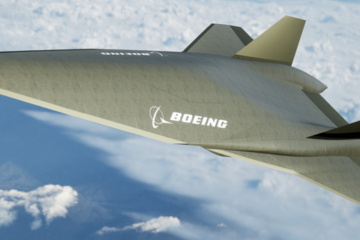
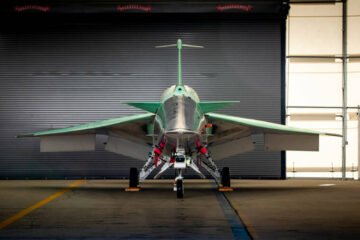
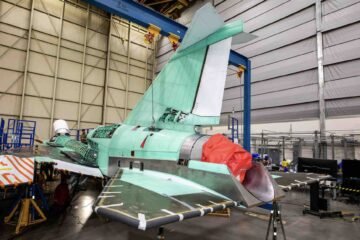
A new transonic truss-braced wing (TTBW) aircraft design is in development, following an announcement from NASA that it has chosen Boeing to lead the design and production of a new full-scale demonstrator aircraft.
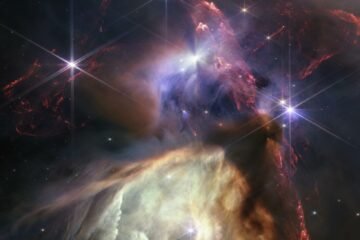
Following the announcement that the James Webb Space Telescope has already endured 14 micrometeoroid impacts, NASA says that, barring an unforeseen event, the groundbreaking observatory should still be able to conduct science operations for another 20 years.
A new study claims solar flares may actually make the planets in Trappist-1's habitability zone even more habitable than first thought. Teams using the James Webb Space Telescope are planning to search those same planets for chemical traces of extraterrestrial life, called 'biosignatures,' in their atmospheres.
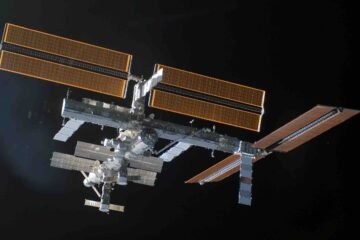
This week, we look at how the Russian space agency is now looking at the possibility of continuing its space operations aboard the International Space Station beyond 2024.
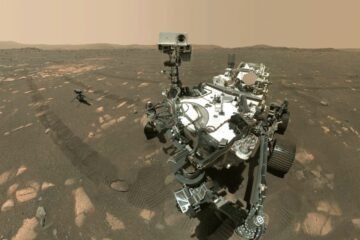
This week, the Perseverance rover's SHERLOC instrument has made potentially promising discoveries in an ancient delta that may help unravel a Martian mystery.
This week's Intelligence Brief examines NASA's plans to smash its DART spacecraft into an asteroiod moonlet millions of miles away from Earth later this month.
NASA’s Artemis mission saw significant setbacks on Saturday, after engineers were unable to resolve a hydrogen leak in an interface connecting the liquid hydrogen fuel feed line with the Space Launch System (SLS) rocket.
A team of scientists have announced the discovery of a possible alien water world that, in astronomical terms, is relatively close to Earth’s backyard.
As NASA gears up for its Artemis mission, we look at what NASA plans to accomplish during its first test flight with its SLS rocket and the Orion capsule.
The James Webb Space Telescope managed to capture images of the most distant star in the universe... this week, we take a look at that star, and the origins of its unique name.
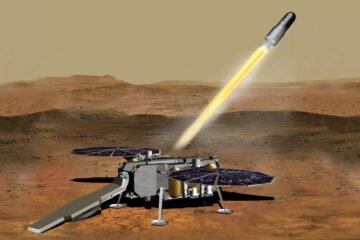
NASA has outlined its latest plans for its ambitious Mars Sample Return Program, now expected to deliver samples collected by the Perseverance rover back to Earth by 2033.