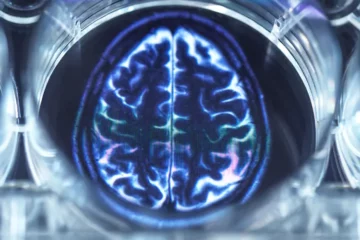
A new biochemical model of memory suggests that the chemistry of the human brain may represent a fundamental difference between biological and artificial intelligence.
While a patient is fully anesthetized and unresponsive, neurons in the hippocampus continue to process language, distinguish different types of words, and generate neural activity consistent with predicting upcoming words.
Researchers at LMU have found a new type of electrical rhythm in the central thalamus that allows them to closely track certain states of consciousness.
This week, an "impossible" crystal formed during a historic nuclear blast, 8000-year-old technology "lost to history," and radical approches to solving consciousness questions are in the news.
At the 15th 'Behind and Beyond the Brain' Symposium, hosted by the Bial Foundation, experts in the fields of neuroscience, psychology, and philosophy gathered for three days to examine the science of end-of-life experiences.
This week, a gravitational wave discovery, the enigma Egypt's Middle Kingdom metallurgists, and the connection between time perception and consciousness are all featured.
This week, the discovery of "hidden" human senses, an ancient Egyptian artifact discovery that challenges existing timelines, and a Webb Telescope discovery are all in the news.
Recent research from the University of Liège is offering new insight into that question, suggesting a deeper relationship between language and awareness than previously understood.
This week in stories we're tracking at The Debrief, consciousness mysteries, a Brazilian UFO controversy, the rediscovery of an ancient star map, and more are covered.
Although researchers can monitor brain activity associated with perception, pain, and awareness, it remains unclear which neural pathways are tied to the origins of consciousness.
2025 has been an exceptional year for discoveries, and we here at The Debrief have kept a watchful eye throughout the last twelve months as several major scientific discoveries and important technological achievements have occurred throughout the year.
Questions about the nature of consciousness remain among the most perplexing areas of modern scientific research, with implications for both the human mind and our broader concept of reality.
In news this week from The Debrief, scientists are looking at the idea of pre-Big Bang "universal consciousness," extreme organism survival in space, and the launch of a cutting-edge new UAP research initiative.
Many people view meditation as a way to achieve a calm state of well-being, but a recent study led by psychologist Nicholas Van Dam at the University of Melbourne suggests the effects can vary from person to person.
A new survey published in Royal Society Open Science is offering a rare snapshot into current scientific thinking about the emotions and consciousness of animals.
In a recent study, researchers at Aalto University used Functional Magnetic Resonance Imaging (fMRI) to explore how different types of love activate the brain.
Stephanie and Kenna are back for a new season of The Debrief Weekly Report. In this episode, they take a mental dip into new findings regarding "hidden consciousness" inside the brain. They also discuss why playing video games is good for your mental well being, and a brand new bandage that uses water and electrical currents to heal wounds faster!
Transformative psychedelic experiences, healing through plant medicines, and UFO disclosure are all among the topics that will be explored in 'Acid for Squares.'