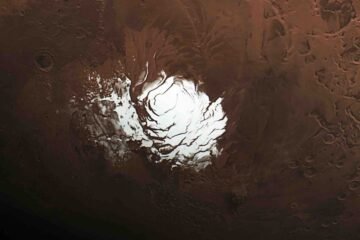
Mars’s most unusual cloud got even stranger when researchers combined data from the ESA Mars Express orbiter mission with a new meteorological model and discovered some very strange physics.
China is turning to artificial intelligence to create a next-generation geological map of Mars, bringing two of the world’s biggest technological competitions—the space race and AI race—together.
New findings that reveal the discovery of “hidden structures” pointing to the existence of a gravity anomaly 1,200 kilometers below the Martian surface.
New evidence of electrical phenomena in the Martian atmosphere could expand our understanding of the Red Planet's chemistry, climate, and habitability.
This week, NASA finally released long-awaited images of the interstellar object 3I/ATLAS, following weeks of silence during the record-long U.S. government shutdown.
Auburn University physicists have detected water activity in comet 3I/ATLAS, marking the first time hydroxyl gas, water's chemical signature, has been observed from an interstellar visitor.
A recent study suggests that Mars displays clear geological signs indicating that ancient rivers once emptied into a massive body of water in its northern hemisphere.
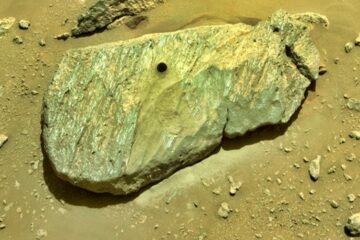
This week, NASA’s Perseverance rover has uncovered compelling chemical signatures in Jezero Crater. Could the offer evidence of life on another planet?
With crewed missions to the Red Planet becoming a realistic possibility for the 2030s, researchers have begun the search for an ideal Mars landing site.