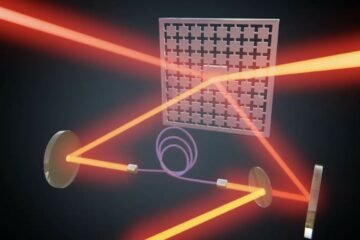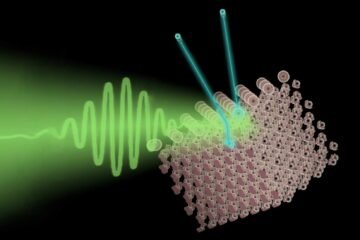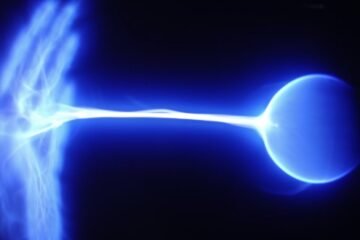
New insights into the phenomenon of contact electricity have been revealed by a research team with the Ulsan National Institute of Science and Technology.
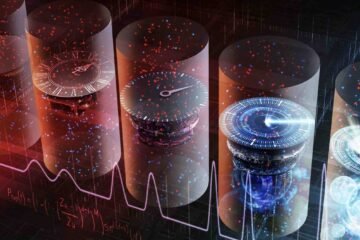
An international team of physicists says it has discovered a new way to measure time, in a research effort that led to the creation of a kind of “quantum watch.”
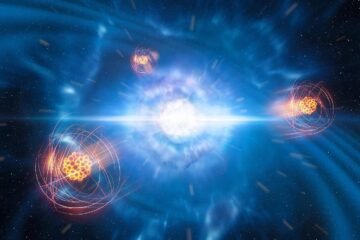
Composed entirely of strange “quark matter,” astronomers believe they may have discovered a long-rumored space object possessing unusual stellar qualities.
During a recent lecture at the University of Michigan that I gave, I was asked why the arrow of cosmic time is characterized by a transition from simplicity to complexity.
Researchers are closing in on the mystery of the arrow of time, and how cells and particles could be the source for various phenomena that gives rise to the human concept of time.
Dr. Nir Lahav explains how a relativistic approach to the hard problem of consciousness may help us unravel some of the perplexing questions we have about the brain, and other mysteries of the mind.
Gravity remains one of the great mysteries of modern physics, and this Toronto-based researcher thinks a new theoretical model may finally help to resolve it.
The likelihood of us finding extraterrestrial technological objects depends on our willingness to look for them, and not just on whether the extraterrestrials had sent them.
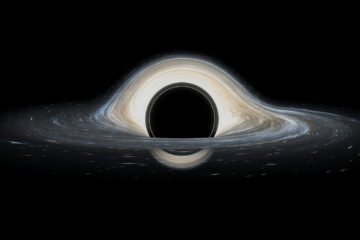
The proper interpretation of recently acquired satellite data relies on Einstein's theory of general relativity, which still presents the best description of gravity as we know it.