More materials are recovered, and new questions surface, in this combined three-part entry covering Day 8 (June 18, 2023) of the Galileo Project team’s expedition.
The Galileo Project continues its recovery of material from the ocean floor during its expedition to recover an interstellar object off the coast of Papua New Guinea.
Suppose NASA astronauts had images of technological objects hovering above Earth that are not identified as human made. Should they share the data with the public or worry that such an act would generate turmoil in society?
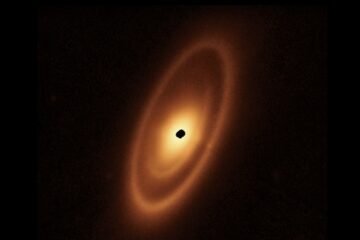
Astronomers studying the first asteroid belt ever seen beyond our solar system have detected a series of glowing discs encircling the star Fomalhaut, according to NASA.
One of the great mysteries of the ancient Americas has finally been solved, according to anthropologists who say they may have unraveled the longstanding mystery of the ancient Mayan calendar.
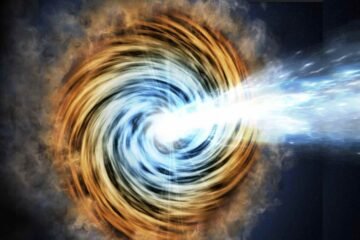
Astronomers say the results of a long-term study of a distant, high-energy space object have yielded new details about the behavior of one of our universe’s most prevalent extragalactic sources of gamma rays.
Future interstellar travel could reveal that the "State of the Universe" is far more significant than our present concerns over worldly political matters at home.
A team of researchers argues the "Great Filter" theory could offer a concerning explanation for why astronomers have yet to find evidence of intelligent alien life.
The suite of instruments assembled by the Galileo Project will seek the evidence needed to properly swipe the extraterrestrial interpretation of UAP to the left or to the right.
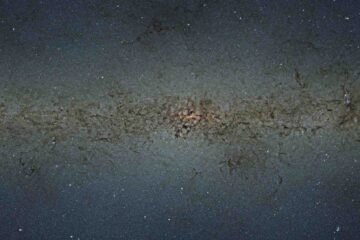
A research team has reported the discovery of a large extragalactic structure obscured from view beyond a portion of the Milky Way galaxy, in a new paper outlining their preliminary findings.
Composed entirely of strange “quark matter,” astronomers believe they may have discovered a long-rumored space object possessing unusual stellar qualities.
During a recent lecture at the University of Michigan that I gave, I was asked why the arrow of cosmic time is characterized by a transition from simplicity to complexity.
The 83-year-old scientist tells The Debrief what more than six decades of studying aerial mysteries have taught him about UAP phenomena and the scientific process.
A Ukrainian UAP study claiming to have captured images of unknown aerial objects has been taken to task by astronomers with the country's National Academy of Sciences.
Despite their striking appearance, Einstein Crosses aren't evidence of distant alien megastructures. However, they could help solve the lingering mystery of dark energy.
For the first time, scientists have mapped the dark matter around distant galaxies in a cosmological analysis that studies high redshift galaxies, according to new research.
Interstellar travel would require major investments. Instead, first we should examine the objects that arrive in our solar system from interstellar space.
Decades after a Quantum-Gravity theory will be discovered, there might be job advertisements for engineers who use it to build vehicles that would carry humans to the stars faster than imagined before.
While humans have gleaned a tremendous amount of knowledge about the universe, there are several astronomical puzzles about our lives that remain mysterious.
The proper interpretation of recently acquired satellite data relies on Einstein's theory of general relativity, which still presents the best description of gravity as we know it.
In this inaugural installment of "Our Cosmic Neighborhood", Avi Loeb gives us perspectives on the challenges presented by any future attempts at communicating with extraterrestrials.
As The Debrief looks back on its first year in business, one of the big areas we have covered involves the search for extraterrestrial intelligence, or SETI.